
A busy day for dragonflies on Dartmoor
The South West Peatland Partnership works to restore the hydrology of peatlands in the UK’s South West by identifying features - like drains, ditches, and erosion channels - that are having a negative impact on the water table. We then block or change these channels to instead retain and slow the flow of water, thereby raising and stabilising the water table.
Pools of water created in this process are, in time, colonised by peat-forming sphagnum mosses and other blanket bog species, allowing the ecoystem to recover and peat to form once more. Pools are often quickly colonised by aquatic invertebrates such as dragonflies, as well as amphibians like newts and frogs.
Due to their sensitivity to changes in land use, water quality and availability, dragonflies can be a helpful indicator of ecological health. A number of upland specialists such as the Common Hawker and Black Darter who depend on acidic boggy pools associated with functioning blanket bogs and valley mires and whose populations have shown a significant decline across the UK in recent years particularly so. We are therefore increasingly monitoring dragonfly populations on restoration sites as an indicator of ecological recovery following restoration and to understand wider benefits of peatland restoration on plants, animals and birds.
This week, 6 of the team from the British Dragonfly Society joined us out on Dartmoor to help us on one of our last summer monitoring days looking at the response of dragonflies and damselfies to our restoration work. Here's what they shared about their day on the moor, where despite the weather, the team spotted 94 Black Darters - fantastic to see.
"After a heavy downpour, the sun shone and within minutes dragonflies of the high moor appeared and began laying eggs. This continued as Ellie, SWPP Monitoring Officer, showed graphically how much water the Sphagnum bog-moss can soak up.
She described how the Peatland Partnership had made hundreds of small dams from peat or wood to hold back rainwater. Sphagnum was growing well and provided the attraction for egg-laying Black Darters, while Common Hawkers (which are far from common in the lowlands!) laid into organic matter in the margins.
Steve, SWPP Project Officer, found exuviae, the larval skins left behind as adult dragonflies emerge from water, of both of these species, proving that dragonflies have colonised the ponds and boggy areas rapidly. Both the darter and hawker are declining in the UK, especially in southern England, due to climate warming, so these fabulous new habitats on Dartmoor provide a lifeline for them."
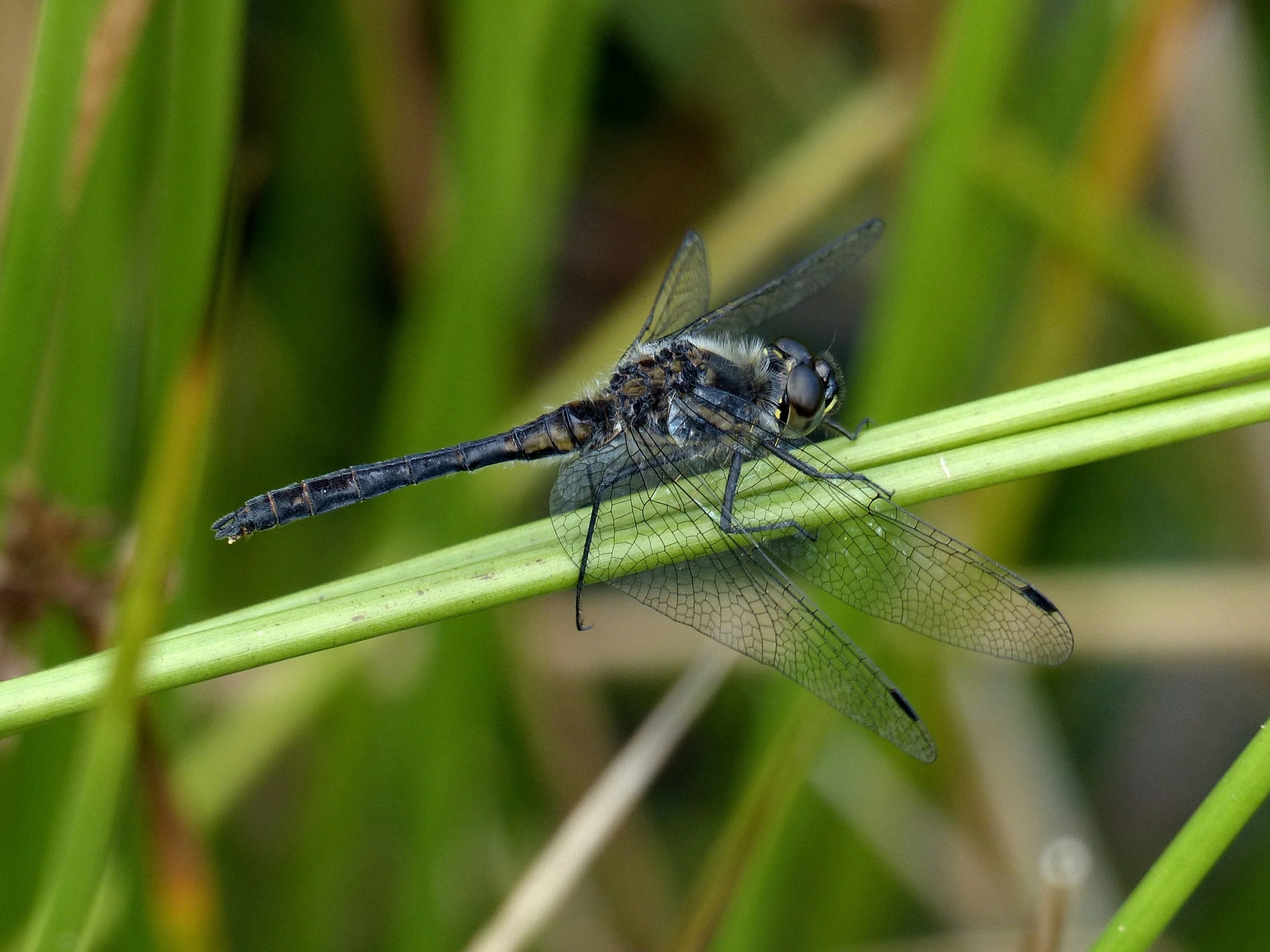
Image: Black Darter, credit: Dave Smallshire