
2025 was a positive year for wildlife recovery out on the South West’s moorlands. Our monitoring team and volunteers had a busy summer surveying a surge in dragonfly numbers on areas of peatland where we have done restoration works across Dartmoor, Bodmin Moor, and Exmoor.
Dragonflies are more than just beautiful and ‘nice to see’, they’re living indicators of healthy wetlands. Some of the oldest winged insects on Earth, dating back over 300 million years, these insects are now under threat from habitat loss and climate change, impacting the wider food chain.
SWPP’s work to raise and stabilise the water table out on the moor, and slow down the flow of water leaving peatlands has left key moorland species thriving.
“Our data shows 2025 was a great year for dragonflies.
Many days in the summer out on the moor we were surrounded by clouds of dragonflies and buzzing insects when in the previous year we would be lucky to see one dragonfly at all.”
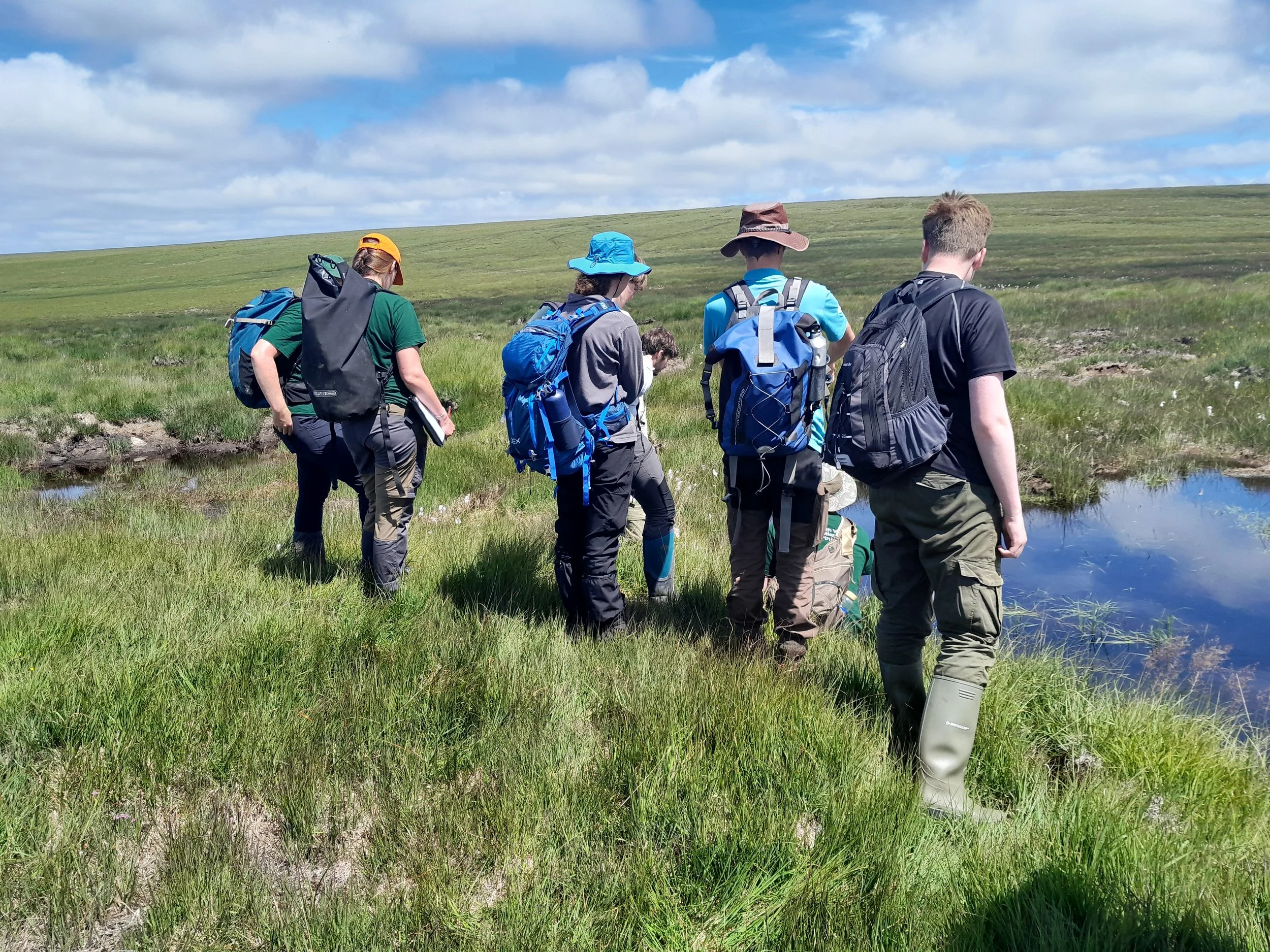
Staff, volunteers carrying out dragonfly surveys in summer 2025 out on Dartmoor
Monitoring revealed a significant increase in species such as the Black Darter and Common Hawker, both considered ‘near threatened’ in Britain and ‘endangered’ in Europe.
At Chetsford Water on Exmoor, managed by the National Trust, the number of dragonfly species tripled in summer 2025 compared to the previous year. This was following restoration works to block a large drainage ditch, slow the flow of water and reduce erosion of the carbon-rich peat.
““Seeing dragonflies not just visiting, but breeding in these restored areas shows that our work is making a real difference. These habitats are becoming lifelines for species that are struggling elsewhere.””
We saw an increase in the populations of all dragonfly species at Chetsford Water in 2025 following restoration, as well the arrival of a number of species not recorded in 2024 before works happened. The four species counted in 2024 rose to 12 in 2025.
“We were delighted to see blanket bog species everywhere we looked, indicating a rapid response following peatland restoration. This is great news for upland dragonflies threatened by habitat degradation and climate warming.”
-
Dave Smallshire, County Dragonfly Recorder for Devon
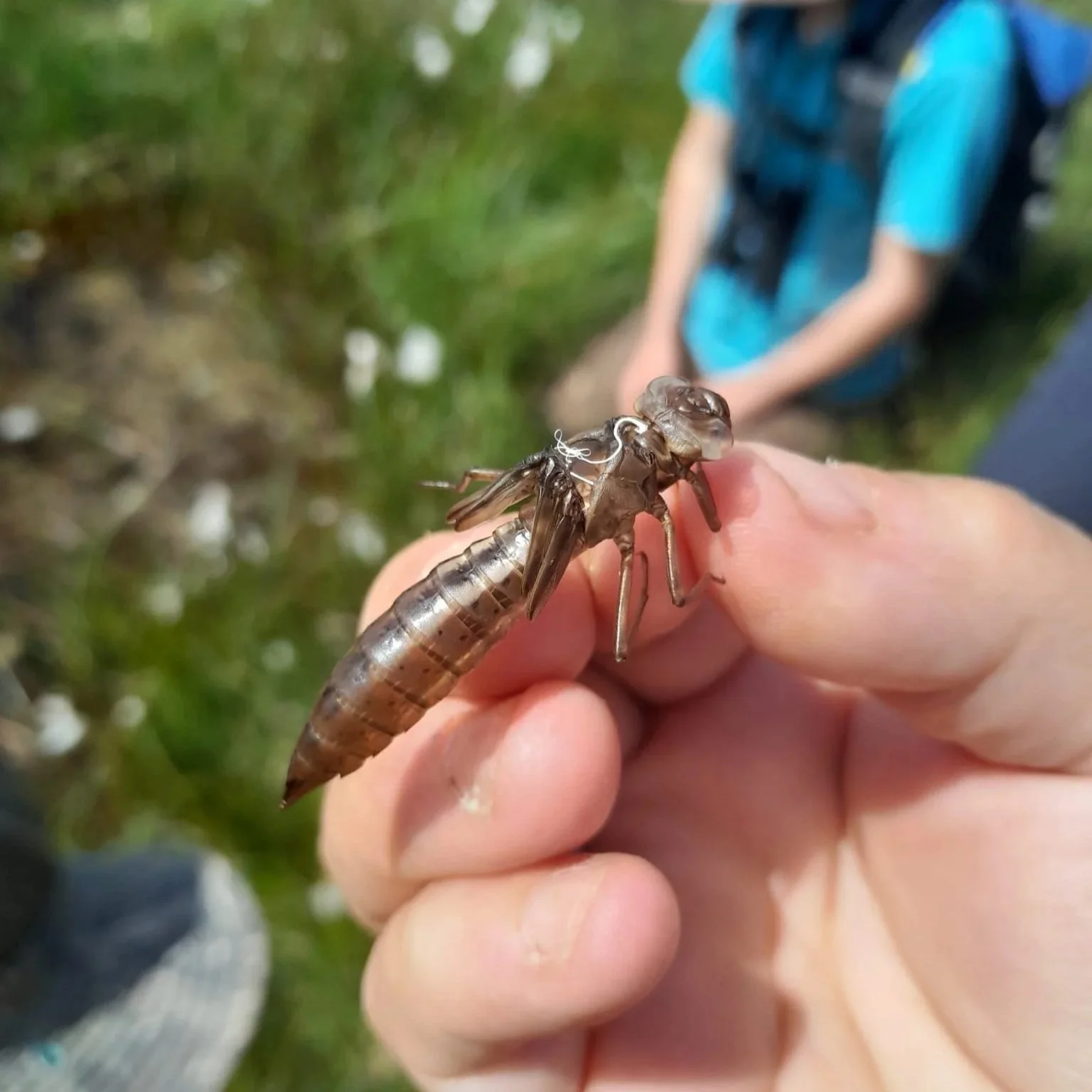
Volunteers from the British Dragonfly Society found exuviae out on a Dartmoor restoration site. These delicate skins are left behind as dragonflies emerge, confirming successful reproduction in newly restored habitats.
“This success is thanks to our volunteers with over 350 hours of support given in 2025 alone. Their contributions are invaluable in helping us monitor and understand the positive impact of raising and stabilising the water table on local wildlife.”
We’re planning on offering opportunities to get involved with volunteering again in summer 2026 - from dragonfly surveys to seeing how the plant species found on restoration sites change over time. We’ll share details of volunteering opportunities, tree planting and more on our ‘Get Involved’ page and social media.