
Are you interested in knowing more about peatland restoration and its links to the hydrology, ecology or the historic environment?
On this page you will find a wide variety of case studies and reports from research SWPP and partners have conducted, commissioned, or been involved with, all with the aim of adding to our understanding of these fascinating and complex environments.
Research, reports and case studies
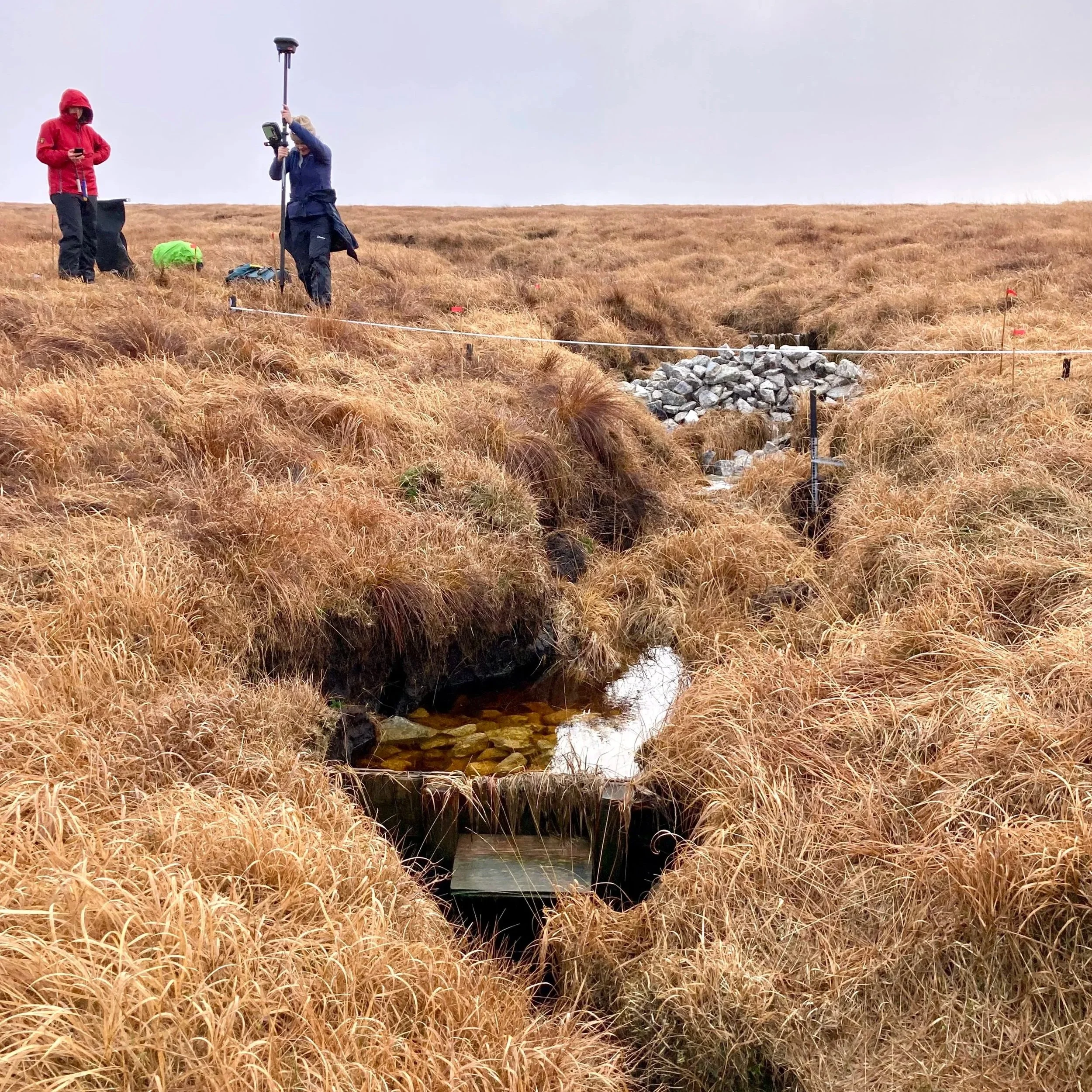
Using GPS to map reshaped gullies on Dartmoor. This helps us to put our dipwells back exactly where they were before, and record how the gully edges have changed over time.
From dragonfly surveys to water quality research, peat depth measurements and camping out on Dartmoor to get those crucial dawn bird counts, the SWPP monitoring team cover a range of tasks throughout the year.
This short video captures the team supported by volunteers and Devon Biodiversity Records Centre, conducting a vegetation transect at an area of conifer to bog conversion on Bodmin Moor.
Monitoring change
‘As soon as you do the work, the invertebrates return.’
Peatland restoration is a long-term process. It takes years for peat to form and the water table within the degraded peat to be raised and stabilised.
But some benefits are near-instant. The change in water retention in the landscape does wonders for insects and other animals. Here’s a short video of the SWPP team monitoring dragonfly species type and count out on Dartmoor after restoration works have taken place.
Evidencing impact




Hydrology, Greenhouse Gases and Carbon
Sphagnum introduction, boundary ditch and associated Natural Flood Management works on shallow peat - WINEP - 2025: Long Holcombe, Exmoor , Exe Head, Exmoor , Alderman’s Barrow Allotment, Exmoor , Halscombe Allotment, Exmoor
Ecology
Historic Environment and Palaeoenvironment
Peatland Systems and Restoration
Turf Cutting on Exmoor, An Archaelogical and Historical Study - H Riley (2014)
Alderman’s Barrow Allotment - Palaeoenvironmental Assessment (2023)
Cranmere Pool, Dartmoor: An Assessment of Historical Sources - P Newman (2024)
Palaeoecological Analysis of Peatland Sites across the South West of England - Fyfe et al. (2025)
Here are some links to wider peatland research that you may find interesting: