
Exmoor’s past from above
Restoration works recently got underway near Challacombe on Exmoor, including creating blocks within historic drainage ditches to raise and stabilise the water level within the peat and slow the flow of water off the moor. With the help of SUMO Services we managed to get a drone up on a bright morning at the end of October to record some of these ditches and other features in detail before the works began.

Drone used to capture aerial imagery and historic features on the site from above before restoration.
The features include a substantial leat that would have taken water off the moor to feed a catchwater meadow system. This system used parallel channels to distribute water evenly over the surface of pasture fields close to farms to prevent freezing of the ground in winter and encourage the early growth of grass in the spring. The technique was an innovative way to bring forward the growth of spring pasture and reduce the need to provide winter fodder for cattle and sheep. Most farms on Exmoor had a catchwater systems in the 19th century, although only a handful are still in use today.
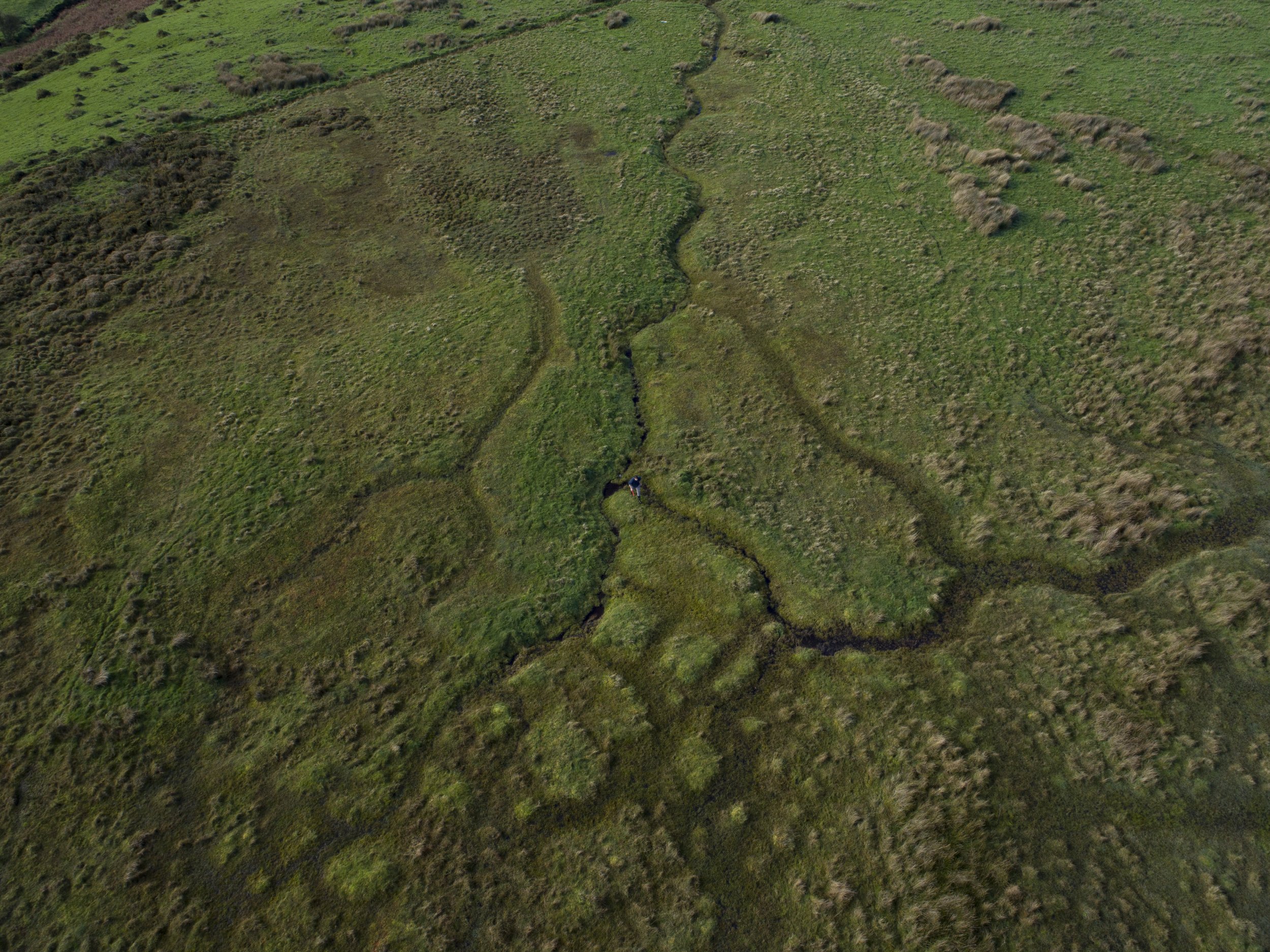
A series of drainage ditches surrounding historic turf cutting remains. This was an important part of the historic practice of peat cutting for fuel, as turf was cut in the late spring and left in stacks to dry before being carted back to moorland edge farms and villages later in the summer after haymaking.
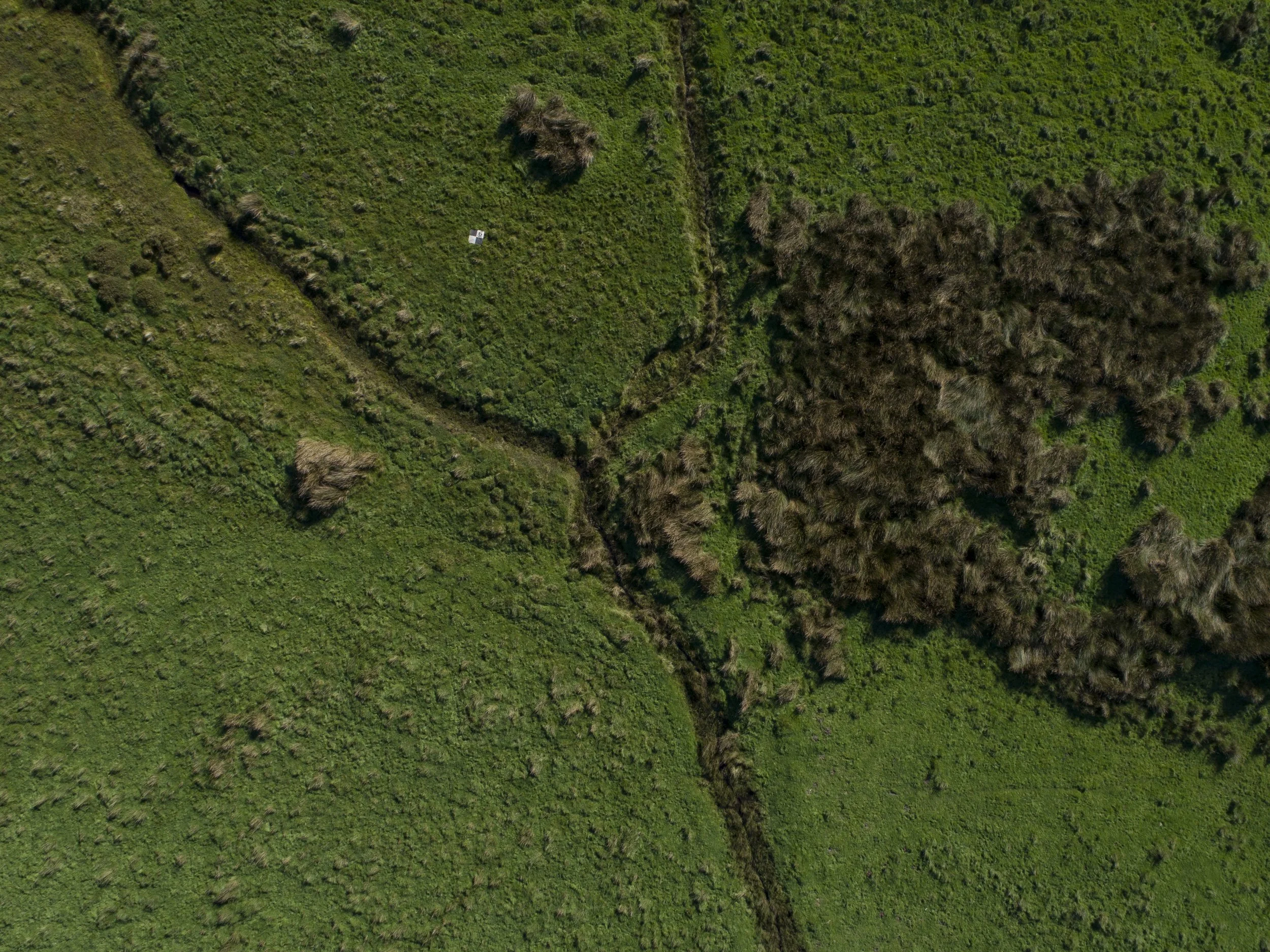
Historic drainage ditches near Challacombe. These originally formed part of catchwater meadow system. This system used parallel channels to distribute water evenly over the surface of pasture fields close to farms to prevent freezing of the ground in winter and encourage the early growth of grass in the spring.
A series of ditches were dug to drain water from an area of historic turf cutting into this leat. Drainage was an important part of the historic practice of peat cutting for fuel, as farms or commoners would have returned to the same cuttings each year. Turf was cut in the late spring and left in stacks to dry before being carted back to moorland edge farms and villages later in the summer after haymaking.
Nearby is a very a well-preserved peat platform, where peat would have been stacked out to dry after cutting. This feature has been marked out to be excluded from restoration works and will be avoided by vehicles. As well as adding new information to the Historic Environment Record, the survey will help us to plan works sensitively around historic features like this that form a small part of Exmoor’s extraordinary moorland farming heritage.
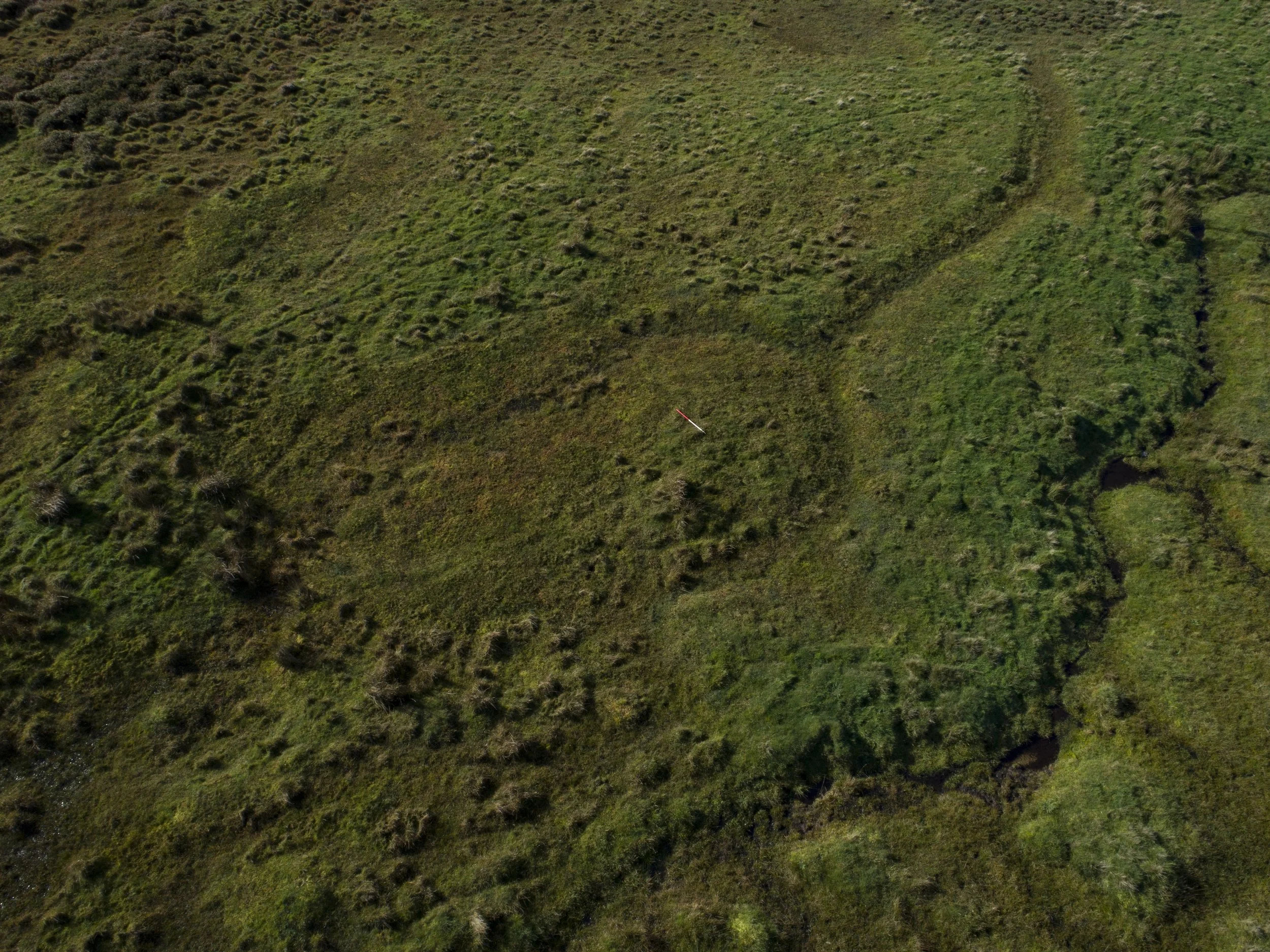
A well-preserved peat platform surrounded by ditches, where peat would have been stacked out to dry after cutting. Features like these are marked out and avoided by vehicles during nearby peatland restoration work.
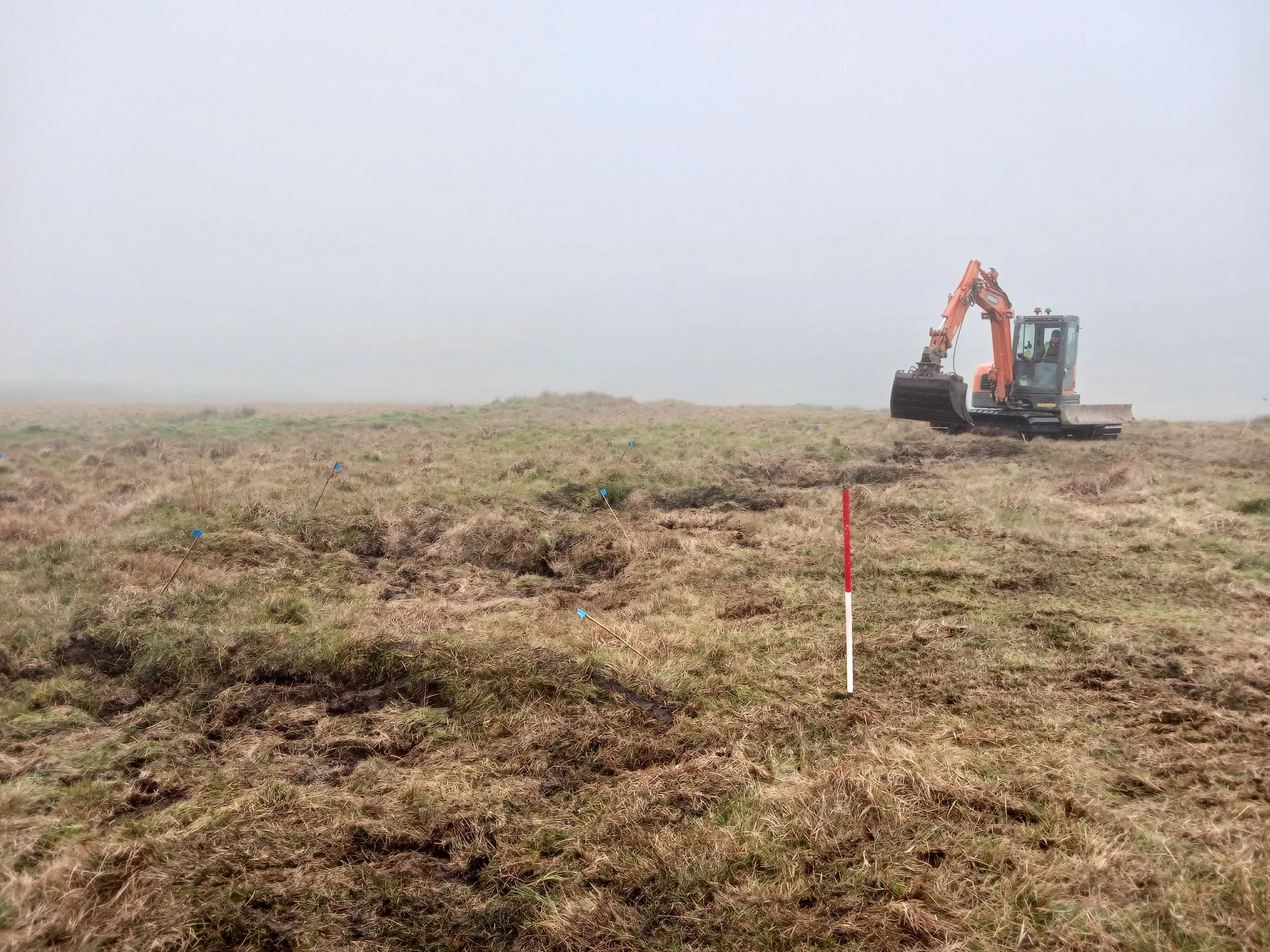
Low peat bunds being created to slow the flow of water away from an area of historic turf cutting at the edge of the moor.