
Research released in February looks at updated climate models and emissions scenarios, and how peatlands across the UK will respond to the warming climate and increasingly changing weather patterns. It's stark in its warning that on several current models, blanket bog in particular - the areas of Dartmoor’s peatland found on the very tops of the moors often impacted by past peat cutting, burning and extraction - may struggle to form more peat past 2060.
You can read this research in the journal of applied ecology at this link here.
This research is a reminder of the urgency of restoring peatlands to combat the climate and biodiversity crisis. It highlights the need for appropriate and robust restoration works to get peat as wet as possible to withstand increasing drought and heavy rainfall. The research shows that we need to act now, at a larger scale and faster, to restore peatlands and prevent further erosion and loss.
Professor Dan Bebber, University of Exeter, speaking on BBC Farming Today:
“[Peatlands are] a carbon asset that we really can’t afford to lose. Huge amounts of carbon are stored in existing peatlands. If we have any hope of preventing the loss of carbon from those peatlands, we need to invest rapidly and heavily in trying to maintain them in as good a state as possible.”
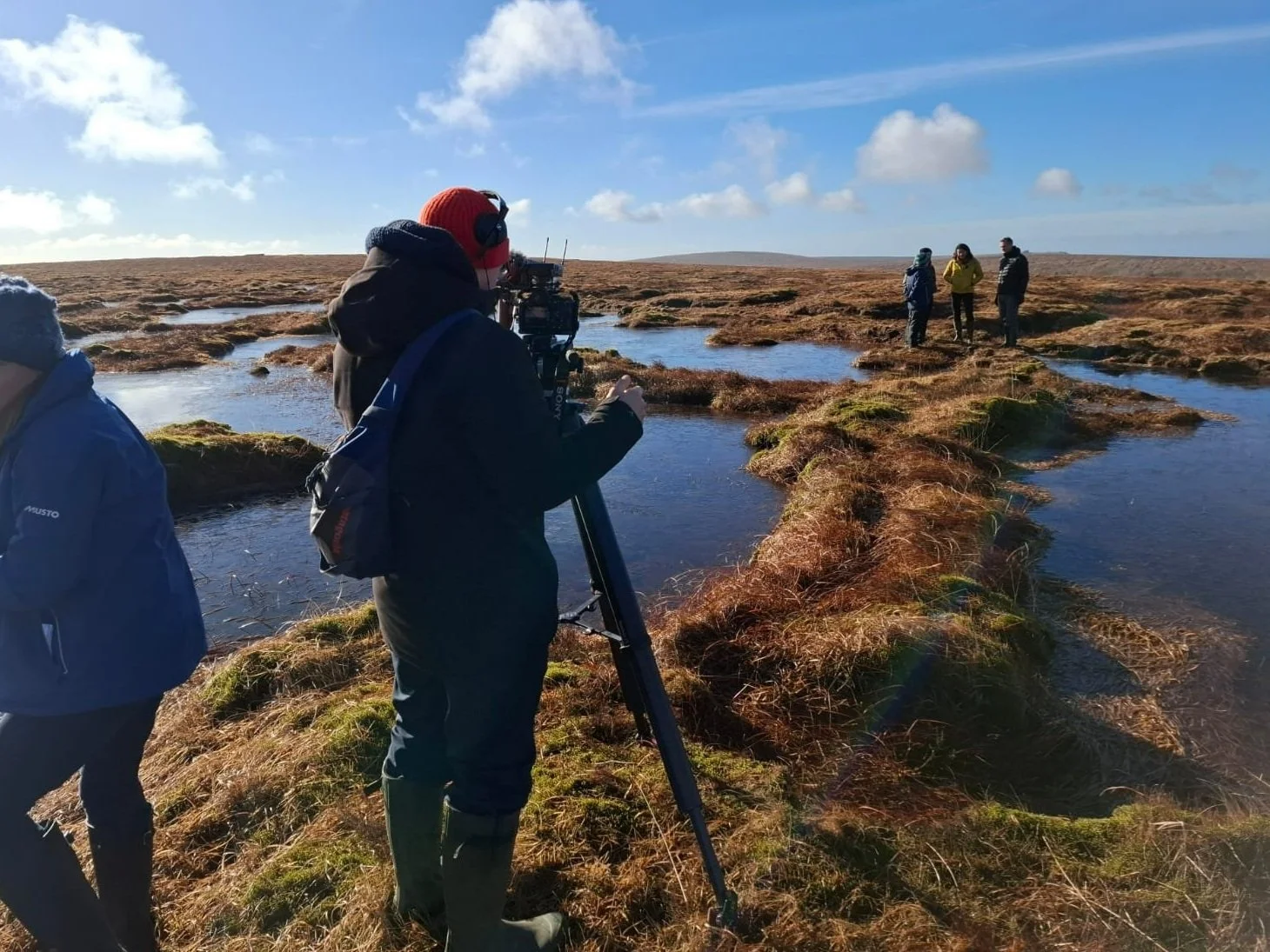
Filming with the BBC at an area of peatland restoration works in late January 2025, with Angela Gallego-Sala, Dan Bebber (2 authors of the research), and SWPP’s George and Morag
The bioclimatic envelope
Research conducted in 2010 revealed that the South West of the UK is operating at the edge of the bioclimatic envelope – where rainfall and warmth conditions mean peatlands can function and form more peat. For the past 15 years, we have therefore known that our region is a canary in the coal mine for showing the impacts of climate change and extreme weather on peatlands elsewhere in the UK.
This knowledge spurred us into action to get our carbon-rich peatlands as resilient to the changing climate as possible, leading to the establishment of the South West Peatland Partnership. We have expanded our team, bought adapted low-ground pressure machinery and worked across thousands of hectares to achieve a high standard of hydrological restoration on peat bogs that, without action, would otherwise continue to dry, erode, and wash away.
Current challenges and adaptations
This latest research should be a wake-up call, highlighting the impact of climate change on peatlands across the UK, from Eryri National Park to the Flow Country and the Peak District. Each region faces unique challenges, but are all facing risks to their peat.
We are already witnessing the effects of drought conditions and heavy rainfall, with unrestored peatlands eroding into our waterways and carbon into the atmosphere. Peatlands are a huge carbon store, holding over 3x the amount of carbon found in the UK’s woodlands, and without action this carbon store will further be released, adding to the climate crisis.
Hope for the future
Despite the challenges of climate breakdown we remain hopeful and have evidence on the ground to be optimistic. Our partnership's science-backed work is making a significant positive difference, holding back water in the landscape through drought period and slowing the flow through record rainfall levels.
Moving forward, we need to continue working from the top of the hill’s blanket bog to the mires and wooded valleys in between, recognizing that all ecosystems are connected. Peatlands can adapt and are found in warmer places worldwide than Devon is, and with clever management, can continue to play an important role in water management and wildlife habitat.
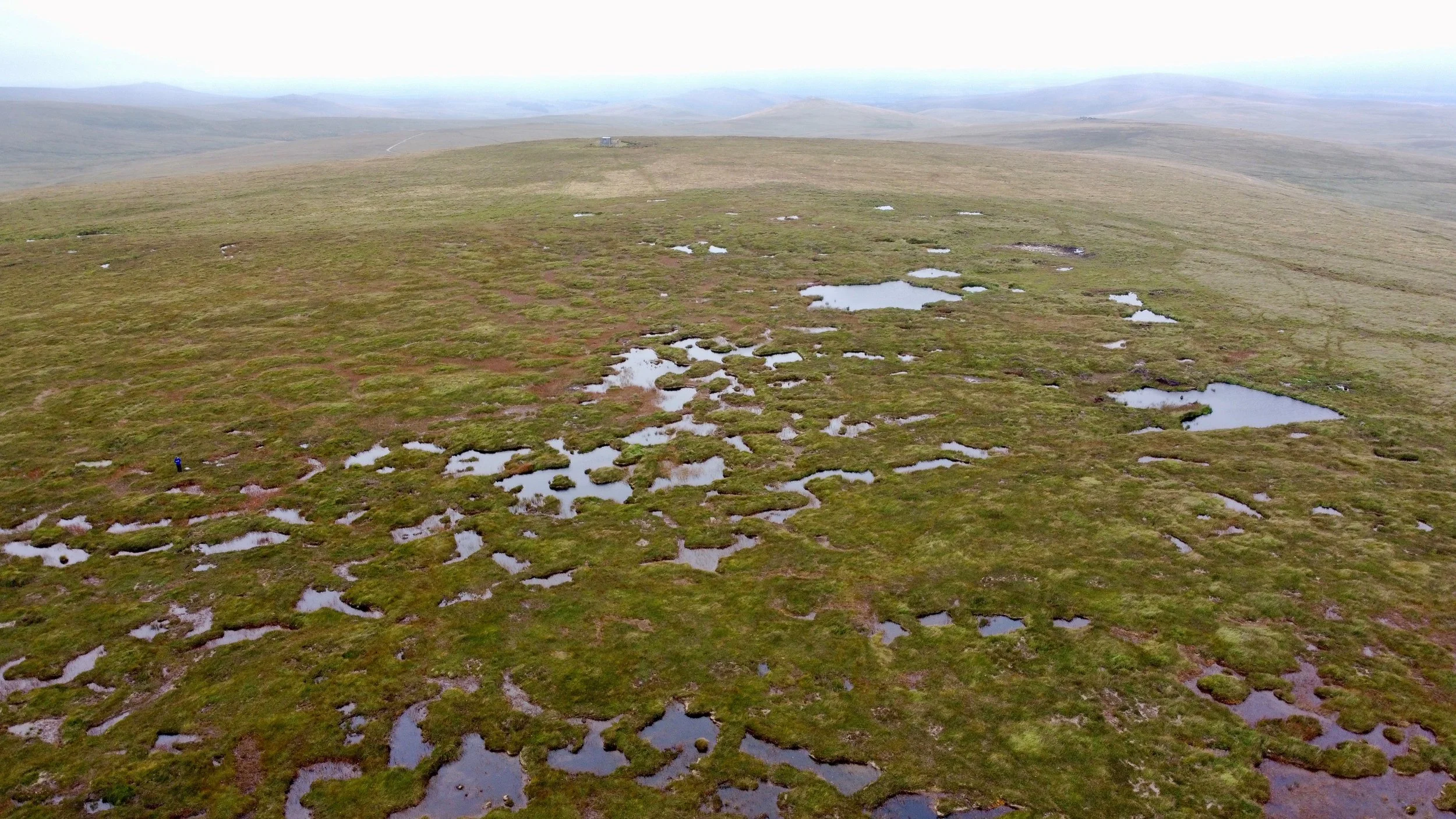
An area of peatland restoration works at Hangingstone Hill during the drought of Summer 2022. Water can clearly be seen being held back in the landscape even in this very dry spell, contrasted to the left of the image where works have not been done, and is degrading with gullies and erosion channels.
The role of research and community
Those who started peatland restoration trials on Exmoor 25 years ago were crucial to today’s successes, and continuing our work with the right backing, finances, and urgency is imperative. Taking the BBC, Angela and Dan out on site highlighted the importance of peatlands as a carbon asset we cannot afford to lose. We had some brilliant and inspiring conversations in the winter sunshine whilst watching the contractors at work blocking erosion channels, holding back water in the landscape, and stabilizing the water table at a high level within the peat..
Morag Angus, SWPP Manager, speaking when filming with BBC on site:
“You can take it one way – doom and gloom, negative, don’t do anything – but for me what the research shows is that we need to do more, at a bigger scale and faster. Peatlands can be very resilient landscapes and habitats, but we have to restore them now.
If we do nothing, we know peat will continue eroding and being lost, exacerbating the climate crisis. Here in the South West we can do something positive with our peatlands, and we should be doing it now at a faster and much bigger scale.
It’s a responsibility of all of us locally, regionally, and nationally to come on board and be supportive.”
Our responsibility is clear: locally, regionally, and nationally, we must urgently support and grow peatland restoration efforts, ensuring that works are done to a high hydrological standard, and have co-benefits for people, wildlife and archaeology. By doing so, we can make a positive impact on the current state and future of our peatlands, ensuring they remain resilient and continue to play a vital role locally and around the world.
For more information, visit the clip on BBC Spotlight on IPlayer and BBC News Article at this link here:
How could Devon's peatlands fall victim to climate change? - BBC News