
Cranmere Photo Update
Healthy functioning peatlands are incredibly important to the South West UK. They provide many benefits for all of us, for wildlife, the climate, the water that reaches our taps, preserving the past, and are beautiful too.
But the peat we see today on Dartmoor has been shaped over hundreds of years by peat cutting, tin streaming, military activity, burning, overgrazing, and/or extraction. This has left the peat heavily degraded and degrading, and in the Cranmere area on North Dartmoor, the deep peat of over 3 metres was full of large erosion channels and gullies funnelling water away, taking both peat and the carbon contained within.
That’s why this area was a key place for our team to work, intervening to tackle this erosion and leave the peat in a better state than we found it in. Here are some images from the team and brilliant contractors from throughout the season, capturing the work done in the area to raise and stabilise the water table, and slow down the flow of water. Over time, our work will settle into the landscape, and we will bring you more aerial and ground images to show just that.

Before and after: Wooden blocks being created in an erosion gulley at Cranmere by contractors, before being covered in peat and topped with vegetation. Very quickly small pools of water form behind the blocks, with water being held back and helping to raise and stabilise the water table in the peat. This reduces the erosion of the carbon-rich peat, creates habitat for wildlife and encourages the hydrological conditions needed for peat-forming sphagnum mosses to colonise and thrive.
Low-ground pressure specialised diggers have worked at Cranmere over the winter and into spring blocking gullies and installing wooden and log blocks. The teams are accompanied by operators who scan the whole site for the huge amount of Unexploded Ordnance (UXO) found buried in the peat from historical military use of the moor - an ongoing challenge and cost for Dartmoor peatland restoration. Thanks to the teams at MJ Excavation & Fencing and SC Nature Recovery for their work out at Cranmere come rain, hail, or shine this season.
Works began in October 2024, and since then, contractors working with SWPP have constructed over 2,150 peat blocks, 280 blocks made from timber, and over 60 log blocks on this site alone. Despite the dry March we had here on Dartmoor the blocks are holding back water, and will soon ‘green up’ settling into the landscape and encouraging a greater variety of more diverse plant species out on the moorland to colonise and thrive. Currently some areas where peat has been moved look disturbed and muddy, but as seen elsewhere on Dartmoor, this soon changes, vegetates, and a greater variety of habitat mosaic is seen.
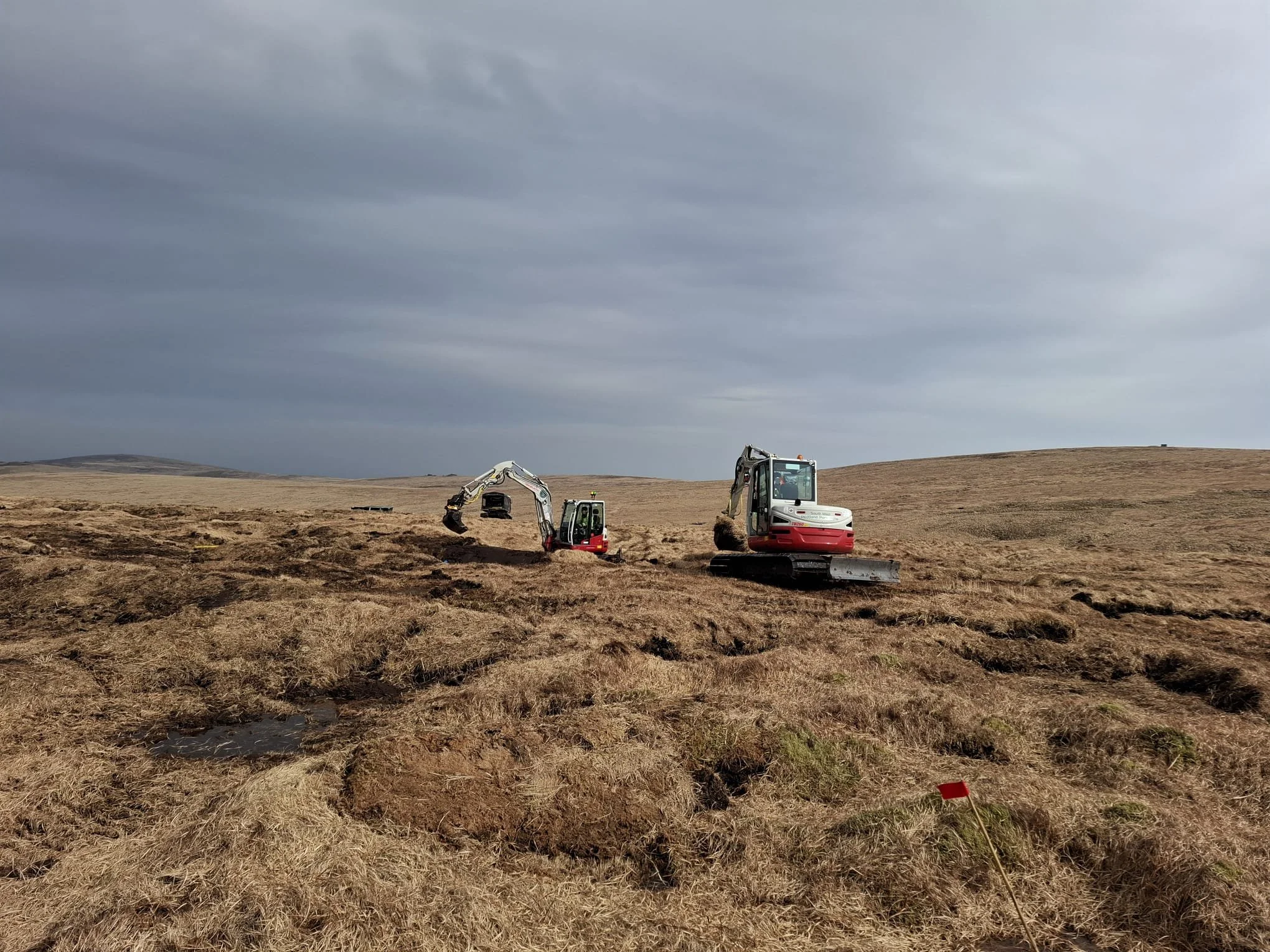
All restoration vehicles and machinery have tracks and are low ground pressure, exerting less pressure per square inch than a human does on the ground. These excavators are what enables us to do what we need to do. They enable us to work effectively at scale through the winter, providing the capability to move and shape the peat and turfs of vegetation to restore the peatland.
Before practical works began, the SWPP carried out a large body of work to compile a restoration plan appropriate for this site which sits in the Forest of Dartmoor on Duchy of Cornwall land. These extensive documents contain details of site ecology, historic environment, landscape, access, land management, ditch blocking areas, timings and costs. All restoration plans are consulted and agreed upon by appropriate government bodies, landowners, farmers and commoners, following sector guidance and best practice for working on peatlands. Amongst others, key stakeholders and funders involved include Natural England, South West Water, Duchy of Cornwall. Forest of Dartmoor Commoners’ Association, Dartmoor National Park Authority, MOD Defence Infrastructure Organisation, Historic England, & Environment Agency.
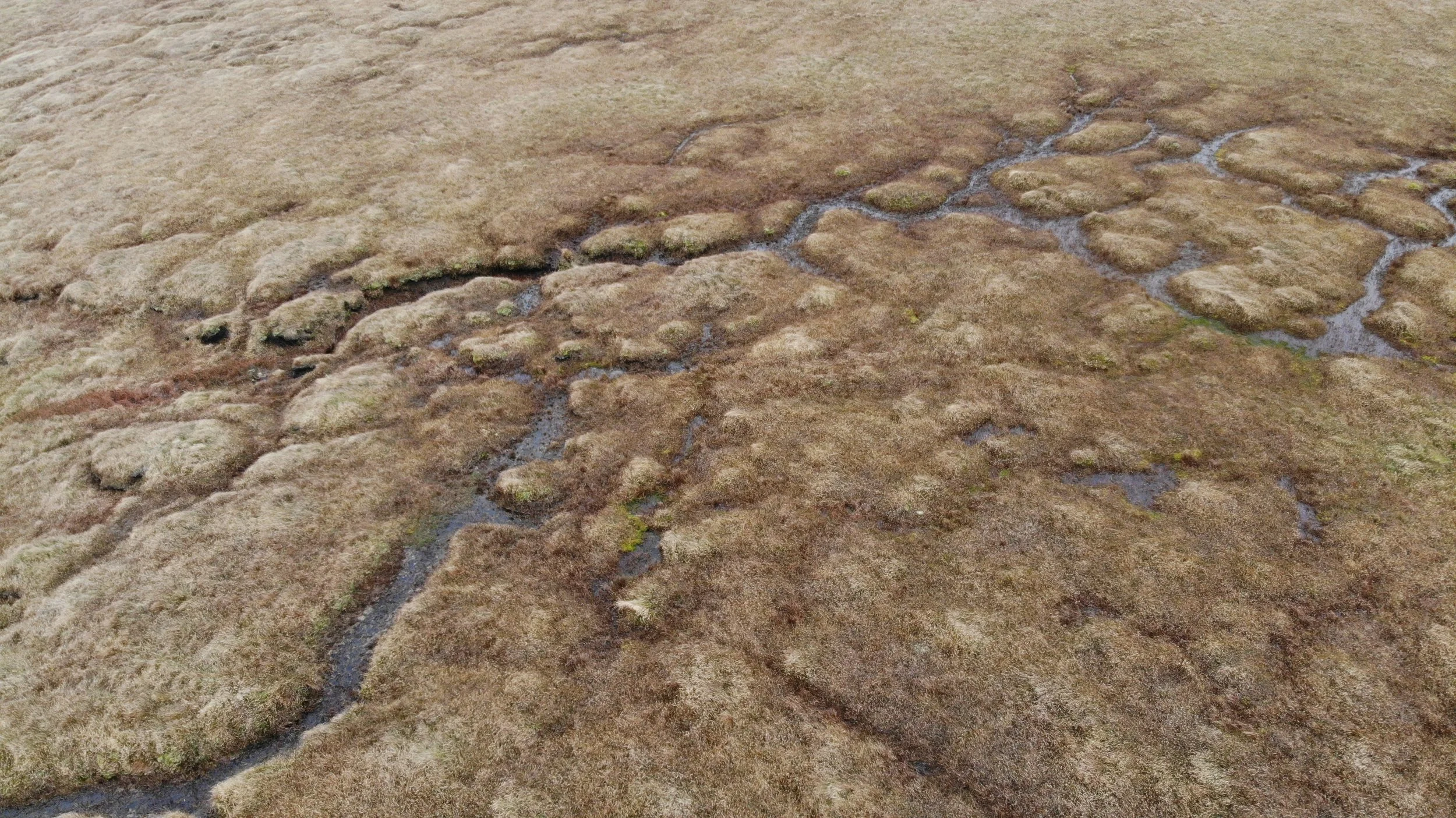
Before: An aerial image captured before restoration works began showing just a small area of the extensive degradation and erosion channels forming through the peat. Healthy functioning peat bogs should not look like this. Without action, these gullies continue to grow, and funnel water with dissolved organic carbon, and the peat itself, away. Our work helps to reduce erosion, block up these channels and keep the carbon in the ground.
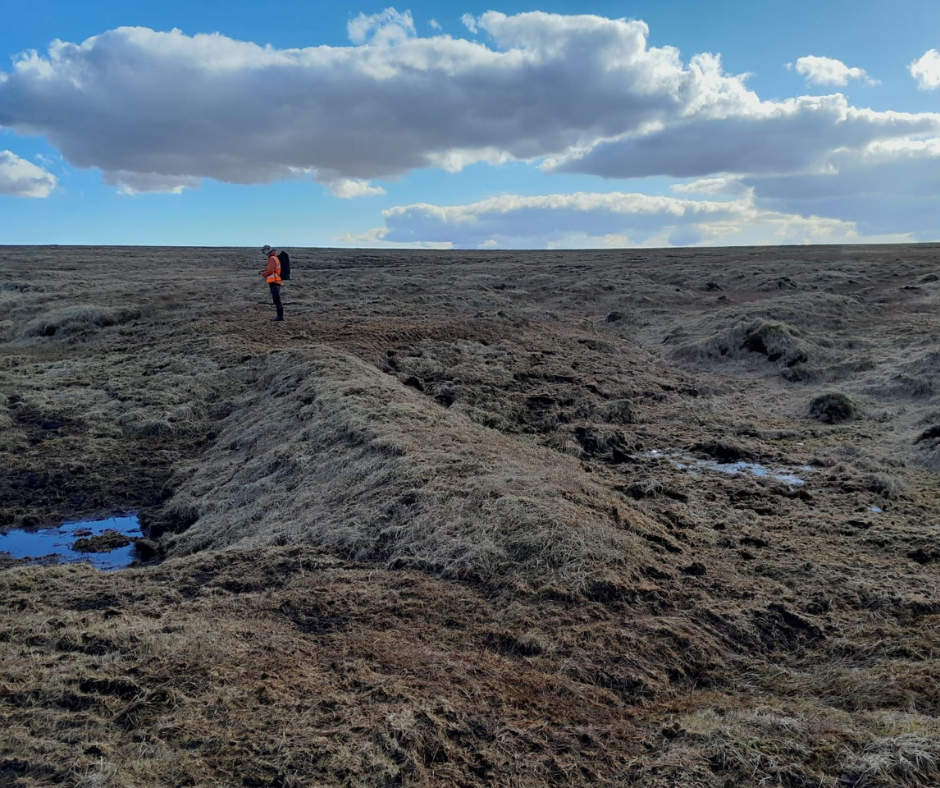
The newly constructed large block of wood, peat and vegetation filling the gap at the northern end of Cranmere Pool with a SWPP officer standing behind the block.
We have been asked by local historical and cultural organisations to block the ‘exit’ on the northern end of Cranmere Pool.
It’s long been the desire of many to see water held in the hollow of the empty pool and as we were working in the area, with low-ground pressure machinery and skilled contractors, we were happy to help. If water could stay in Cranmere Pool, it would not only be of cultural importance and a lovely area of water for insects and wildlife, but also help in our aim to raise and stabilise the local water table in peat that is in a continually degrading and eroding condition.
After consultation, surveying – including 3D drone survey, a commissioned report on documentary evidence surrounding Cranmere Pool and an ongoing programme of palaeoenvironmental study into the environment in and around the pool as preserved in the peat - and under an archaeological watching brief, a large block was installed across the ‘exit’ of the hollow in mid-February. This was constructed by digging down, installing wooden planks, covering the wood back up with peat and topping it with vegetation
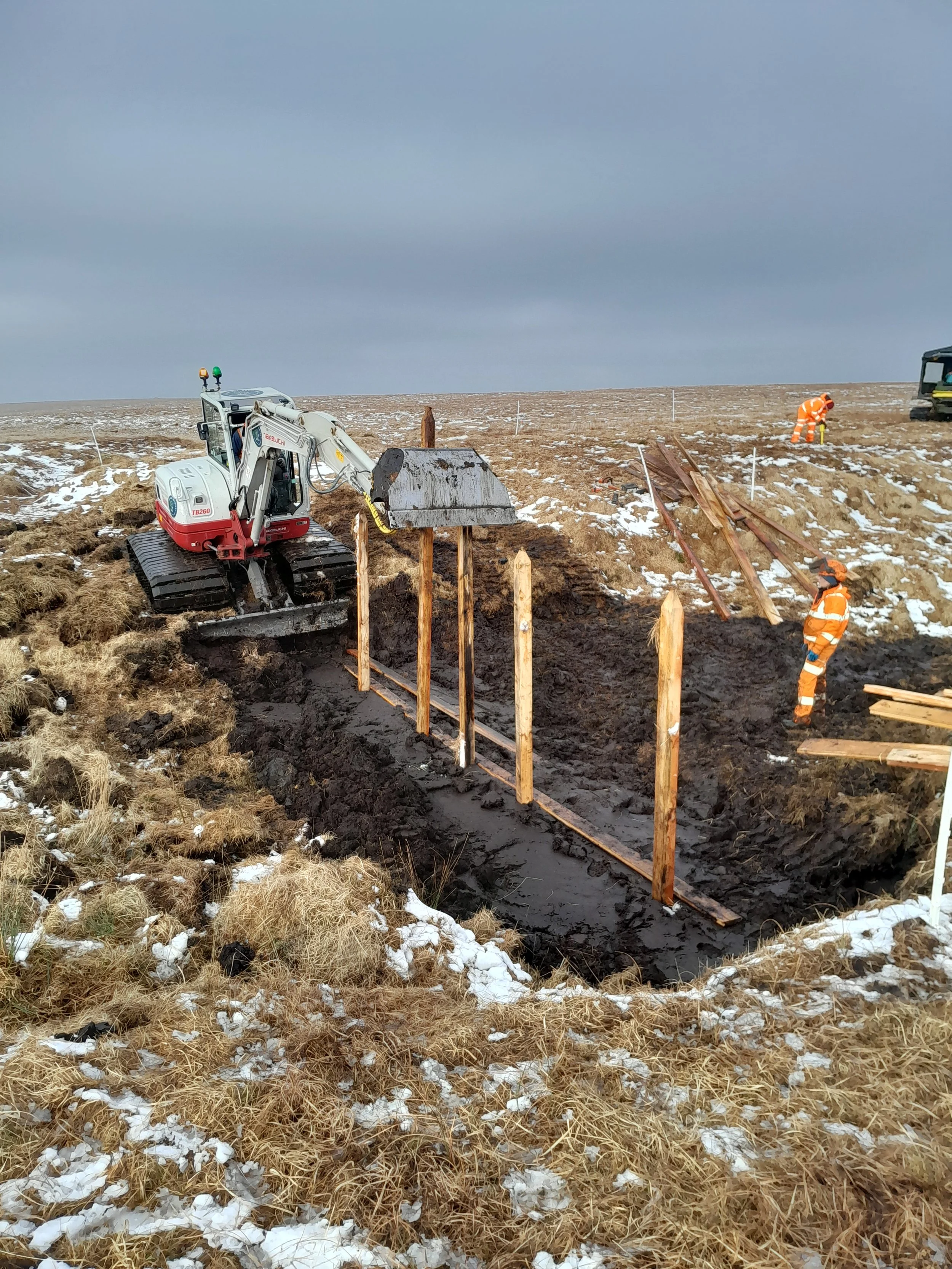
Construction of the peat and wood block underway
Having removed the top vegetation, the team excavated the peat to a depth of approx 1.2m below the surface of the floor. This was done to allow peat pipes and/or archaeological features of interest to be identified and recorded. The peat was then returned to the trench, and compacted with the back of the excavator bucket to disrupt the peat pipes found. Wooden posts were then inserted into the peat down to the bedrock surface along the length of the proposed timber block. Planks were then inserted into the peat below and sides of the “exit point” and attached to the posts. Joins between planks occur on different posts, to increase the strength of the block. Additional planks were then stacked on top, inserted into the peat on the sides, and nailed to the posts, using the tongue and groove on said planks to seal them together.
On completion of the timber structure, the block was then finished by covering in a dome of peat taken from nearby borrow pits and re-topped with the turf removed initially.
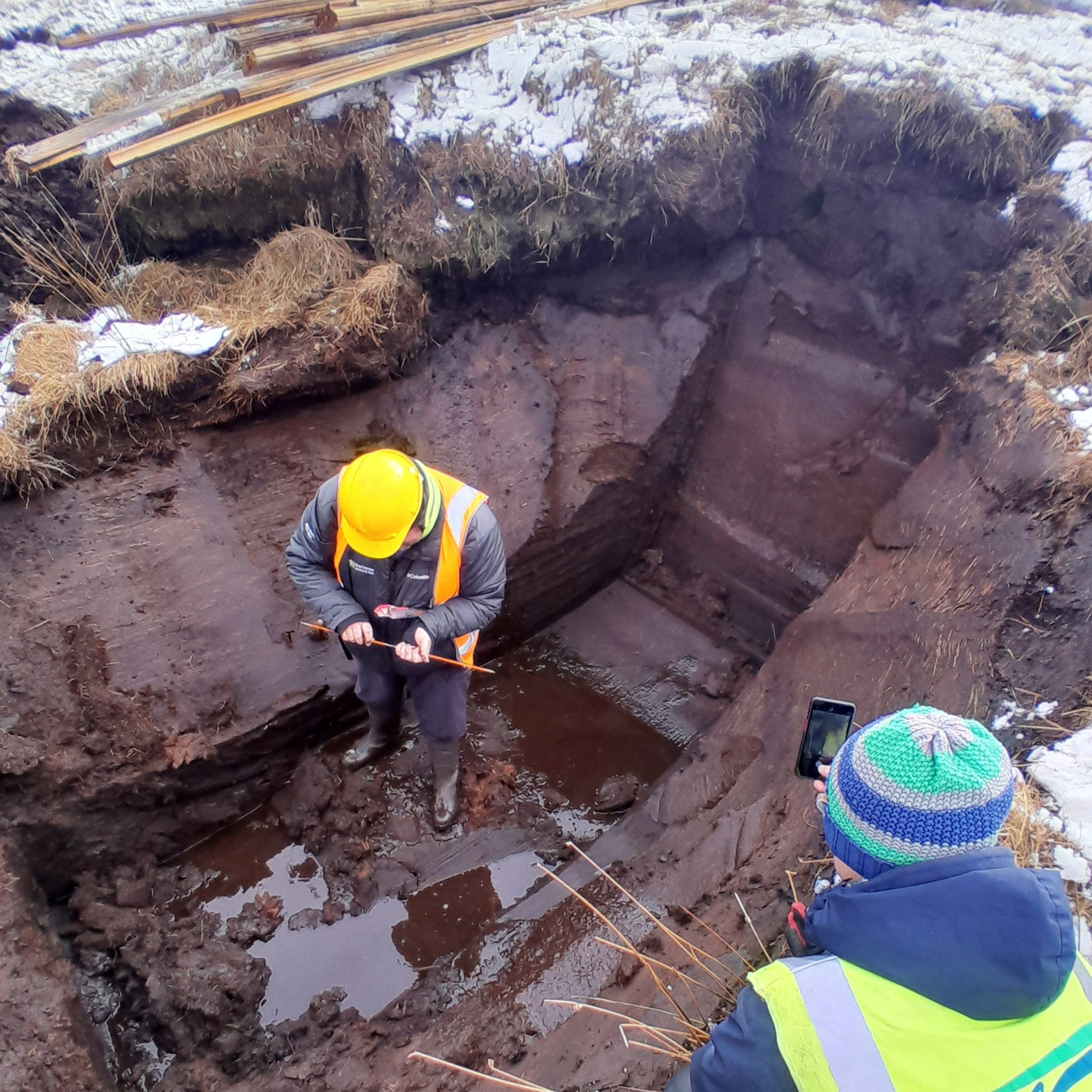
SWPP Historic Environment Officer documenting the peat profile within the 1.2m deep trench during the construction process. Pools of water can be seen leaking out of erosive peat pipes within the peat column.
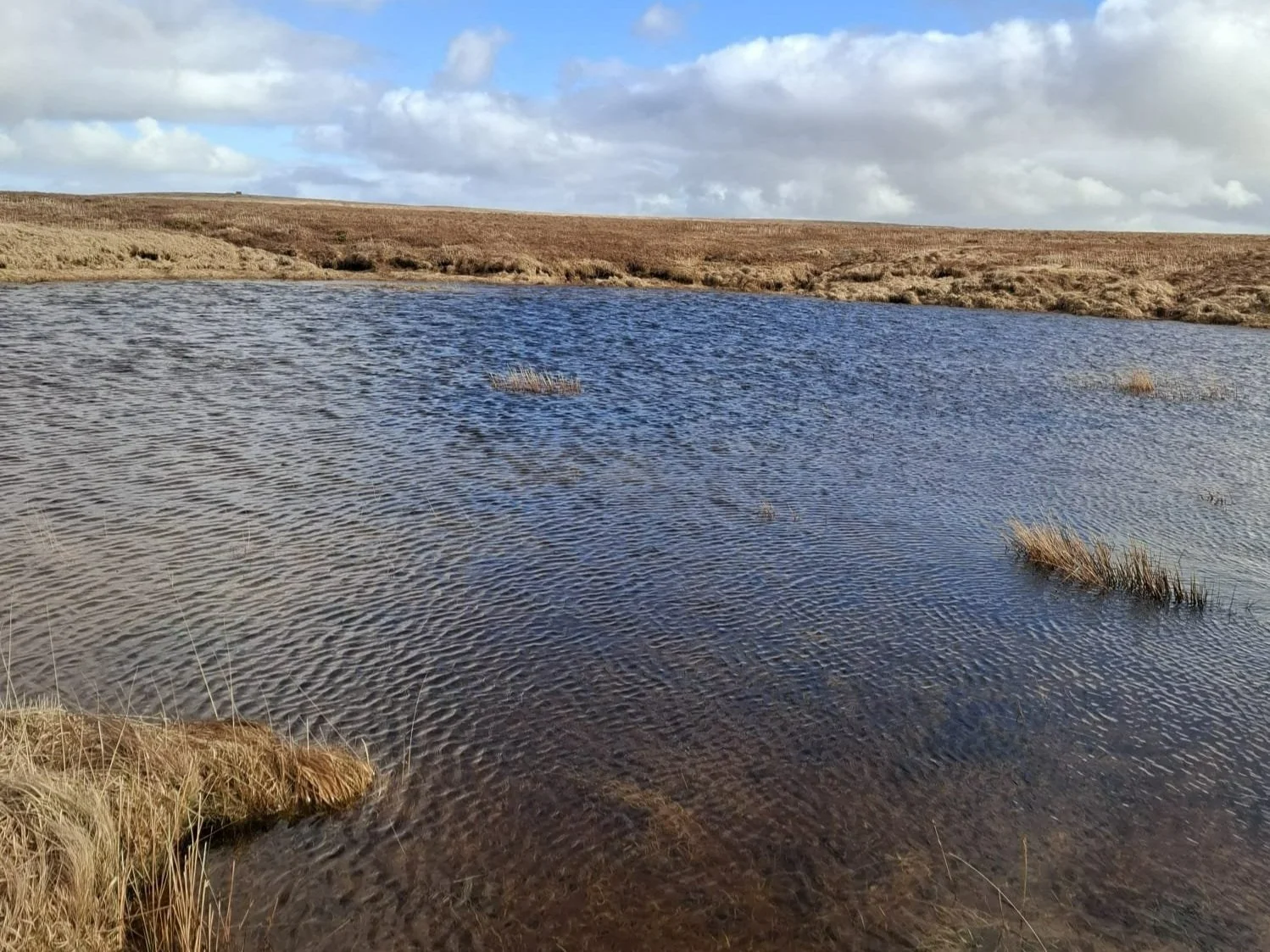
Water being temporarily held back in Cranmere Pool after very heavy rainfall before drawing down and emptying.
Since the block was created, after extremely heavy periods of rainfall, the pool has filled with large amounts of water. This water is held behind in the hollow for a short period of time, and then drains down.
The severely degraded condition of the peat at the base of the pool, in which we have observed peat pipes – erosion channels that funnel water away below the peat or just above the bedrock – is the likely reason why we have witnessed the pool to very quickly lose the water each time. It is also likely that this will continue to be the case following periods of heavy rainfall: the pool will fill and then draw down quickly again and empty.
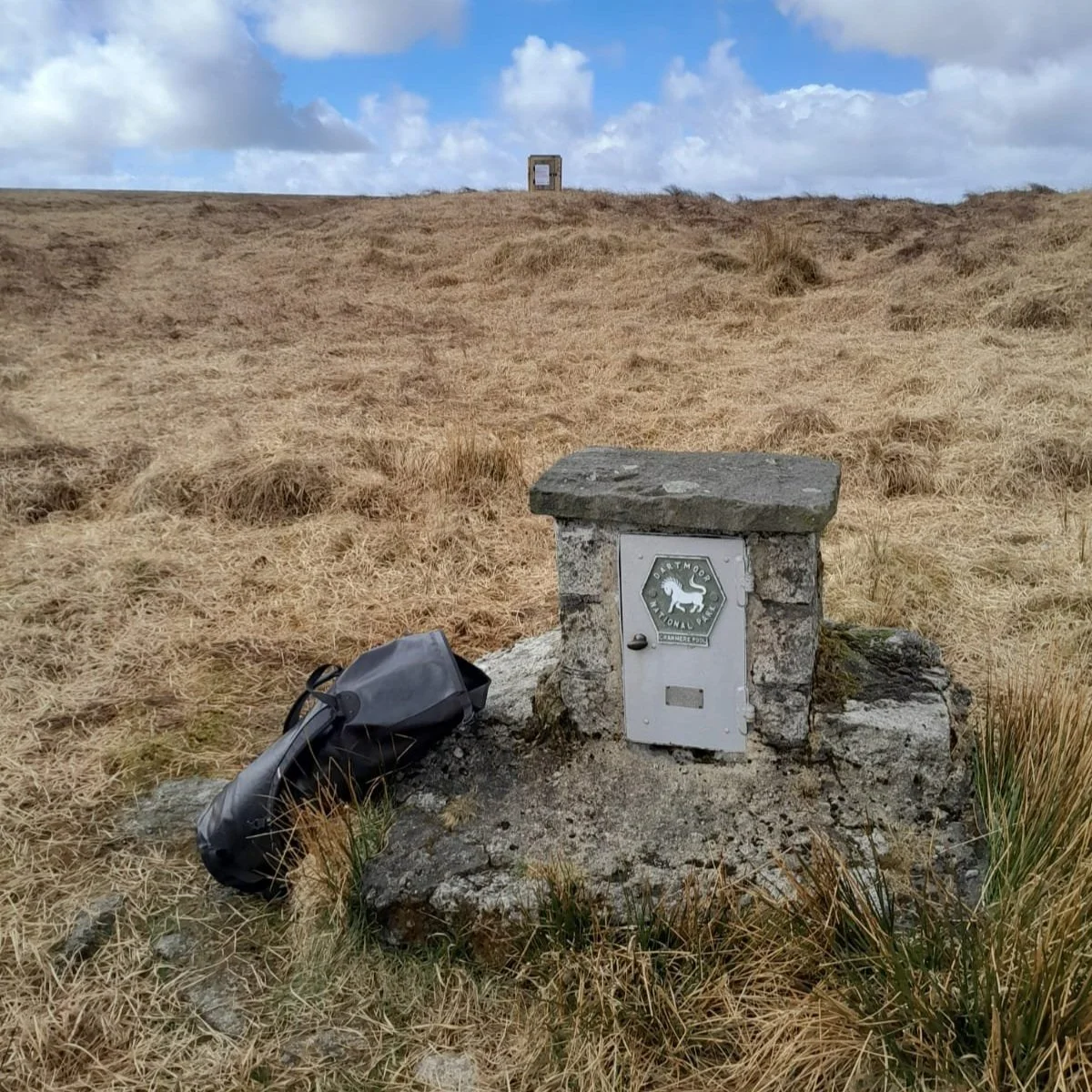
The current Cranmere Letterbox in the foreground of the image, with a temporary box in the background, to allow visitors to leave their stamp should the pool temporarily fill again after heavy rain.
Cranmere has been a destination for hikers since the 1850’s seeking the Cranmere Letterbox, in the Dartmoor Letterboxing tradition. The Letterbox itself has changed over the years in its appearance and location - from a stone jar to a tin box - and currently sits within the depression of Cranmere Pool.
The extremely high level briefly held back in the pool meant that the current Cranmere stone Letterbox has been immersed in the water and so will be moved. Discussions have been had with Dartmoor National Park Authority, Duchy of Cornwall, Dartmoor Letterboxing Club and advice sought from other local charities and groups, who are happy for the SWPP to move the current letterbox very nearby to a slightly higher location away from any recurring water level.
In the meantime, you’ll find a temporary letterbox has been created to allow easier access to hikers wishing to collect their stamp or leave their message and preserve the notebook within.
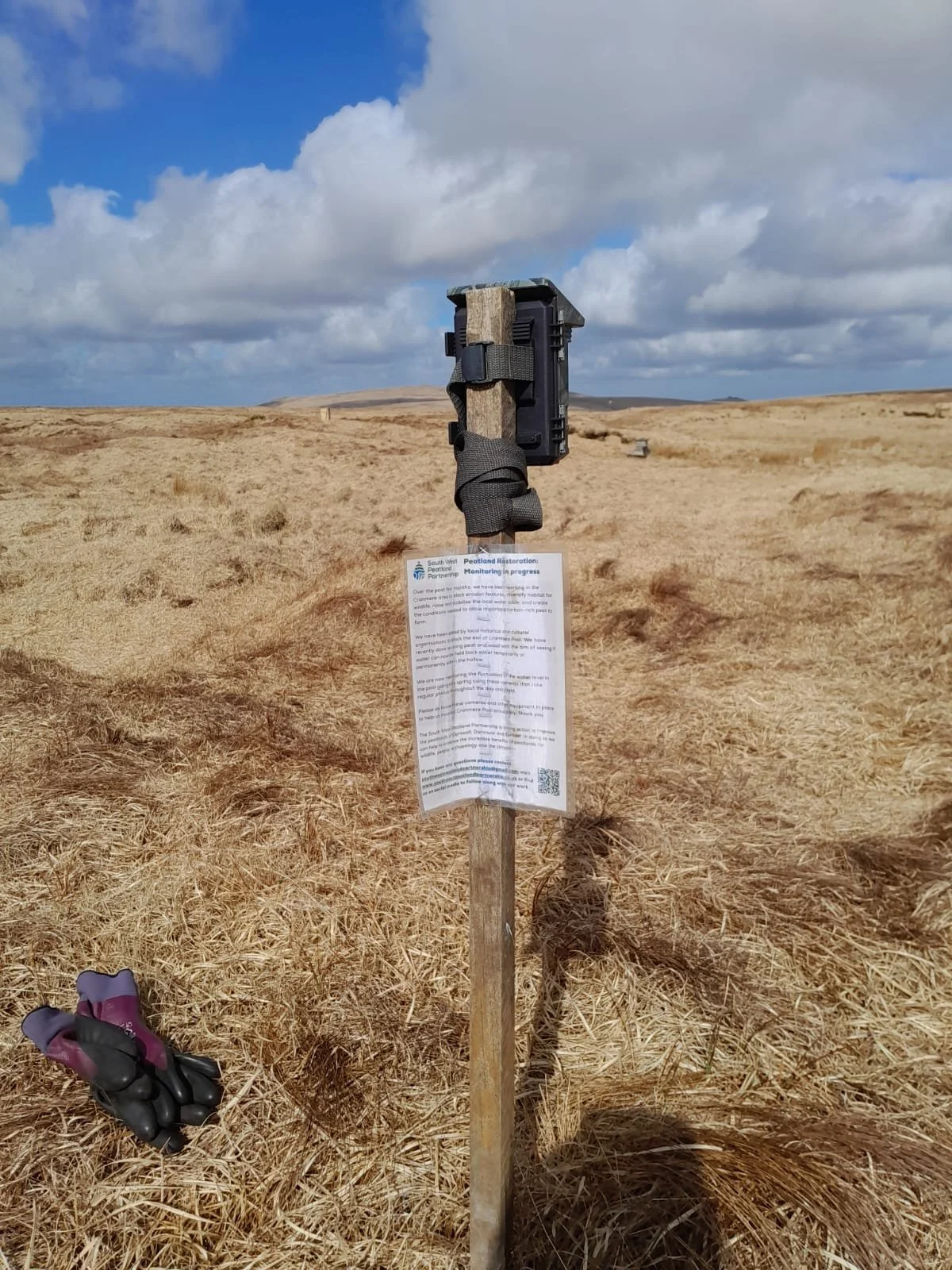
If you're hiking out to the area this spring and into summer, you'll see the large block recently created and also some monitoring equipment. Please help us to monitor the bund and any fluctuations in the level of the water in the pool by leaving these in situ.
Timelapse cameras are in place to monitor the fluctuation of any water in the pool, dipwells are monitoring the height and stability of the local water table every 15 minutes and a range of surveys are being carried out by our team and group of volunteers.
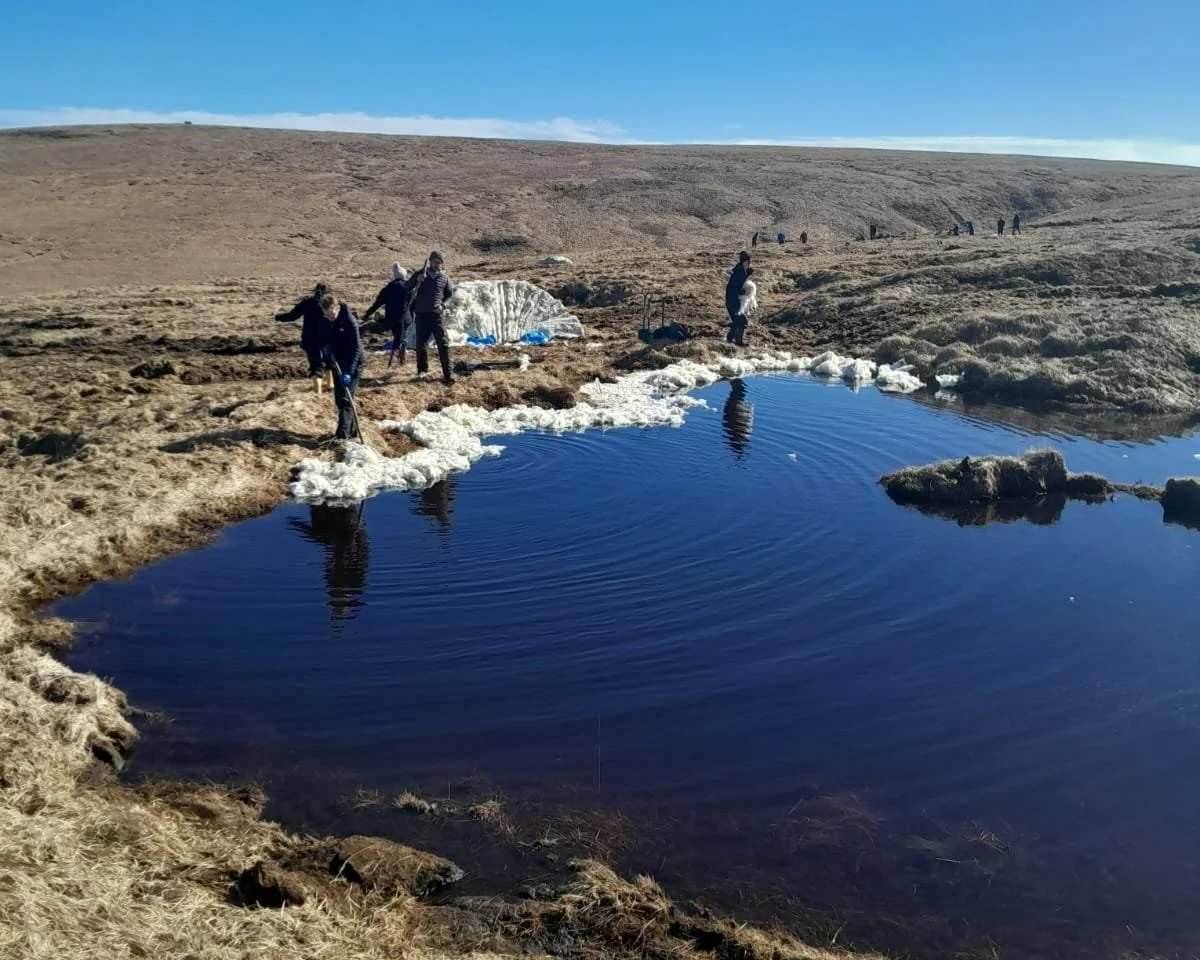
Newly-added wool situated around the edge of a large pool at Cranmere. Dried willow has been used to help fix it into place. More wool has been placed at the predominantly down wind end of the pool, to help counteract the wave action seen on large pools on windy days. Such wave action makes it harder for Sphagnum species to colonise.
SWPP is using works at Cranmere as an opportunity to trial the use of local wool as an alternative material to block erosion features on Dartmoor and trial other uses for this sustainable, low cost, and in high supply local material. Wool also currently has a very low market value, therefore if deemed a suitable material for peatland restoration, could provide a valuable boost to the local sheep farming economy.
.In order to achieve full hydrological restoration, blocks within drainage features on Dartmoor can occasionally create larger pools than normal. Such pools can be challenging for pioneering sphagnum species such as Sphagnum cuspidatum to colonise due to the disturbance caused by small wind generated waves across the surface of the pool. We theorise that placing sheep’s wool around the edge of these pools could potentially create a substrate for these sphagnum mosses and other bog vegetation to colonise at a rate quicker than if the wool were not there. We will continue to assess the impact of this trial of wool over the summer.

The SWPP team using the newly created blocks to walk across the Cranmere area. Restoration works are extensive and have to be to have a real impact on the ongoing degradation, however are designed to enable livestock and people to move through the landscape and can provide easier access than when hiking through dense Molinia, erosion gullies and peat pipes. Un-rewetted routes can be accessed to the left or right of this area easily if preferred. Hikers can avoid pools by navigating around uphill or downhill of the pools seen here.

Joe Crowley and SWPP’s Jonny being filmed helping contractors construct a wooden block in an erosion gulley.
We were pleased to welcome the BBC Countryfile team out to Cranmere back in December 2024 to capture the work of our team, contractors on site and use of local, sustainable materials like Woodland Trust wood in our restoration approaches.
In this Dartmoor episode, Joe Crowley visited Woodland Trust’s Fingle Woods to follow along their project to remove conifers and bring back native trees and wildlife. A few miles away, at Cranmere on North Dartmoor, Joe then spent time with the SWPP team, putting that milled wood to use constructing one of a series of wooden blocks in an eroding channel - helping to slow the flow of water and restore our dried and degrading peat bogs.
You can catch up on Iplayer to see restoration in action, winter on Dartmoor in all its glory, and our lovely team and contractors working together to make a difference to the future of these important spaces for water, wildlife, history, people and carbon storage.
It is incredibly exciting to have our work featured on a reputable TV programme like Countryfile.
It highlights the gravitas of our work, and allows us to contribute to a wider message of hope around efforts to conserve and enhance our natural habitats.
Jonny, SWPP Restoration Officer
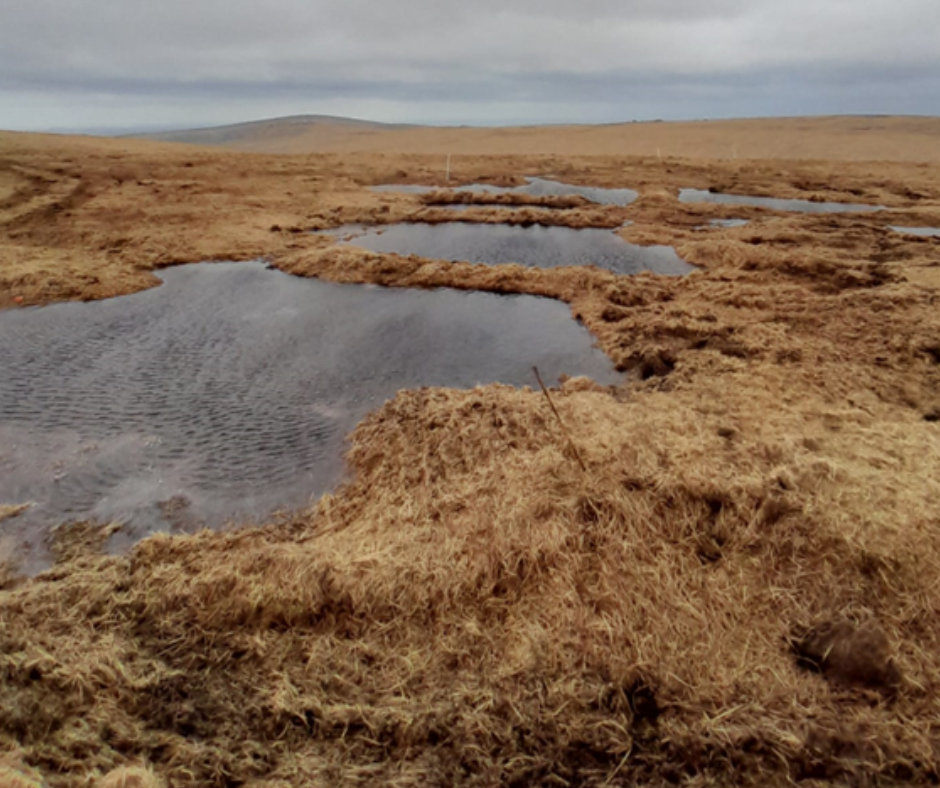
The nearest block in this photo was created on BBC’s Countryfile on 19th December. This photo was taken on 7th February 2025, showcasing how well it is holding back water and working.
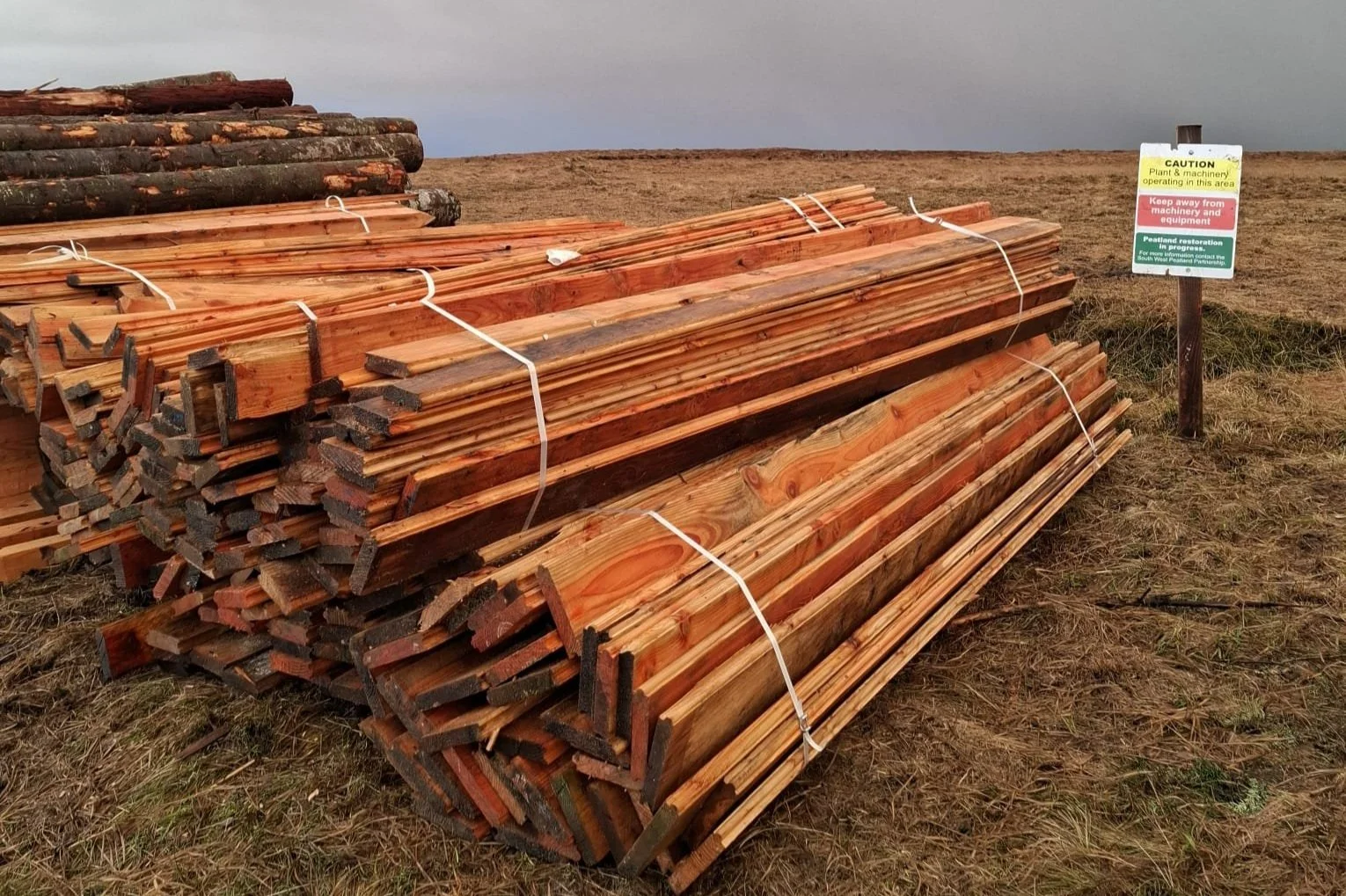
Some of the milled wood sourced from local Woodland Trust restoration projects. Some of these piles will stay in the Cranmere area over the summer, ready for us to pick up and carry on works nearby come the end of the bird-nesting season.
Follow along with us on social media to see more images from the teams out in the moorlands of the South West, all year round.