
Tor Royal restoration from above
The South West Peatland Partnership worked on 25 hectares of Tor Royal Bog in Spring 2025 to block erosion channels, install blocks made from peat and wood, and raise and stabilise the water table in the carbon-rich peat.
Before restoration, some of this Dartmoor site was a good example of peat bog. However, moorland reclamation, drainage ditches and peat cuttings had led to erosion, dry peat, and changes in vegetation. Contractors used low-ground pressure machinery to block channels, helping to hold back water to reduce erosion and sediments washing downstream and improving hydrological function.
Having had such a dry March, as soon as it finally rained the effective blocking of channels and erosion gullies was clear to see. Pools form and water is held back on the bog, where it should be. In time, these pools will settle into the landscape, help to raise and stabilise the water table, reduce erosion of the carbon-rich peat and slowly be colonised with peat-forming sphagnum mosses.
The impact of works can now be seen in updated Google Earth images, below, at this site and additional Duchy of Cornwall land we have worked on across Dartmoor. We’re excited to see these works bed in, become greener with a more diverse range of plant species, and how the updated aerial images look in another 3 years time.
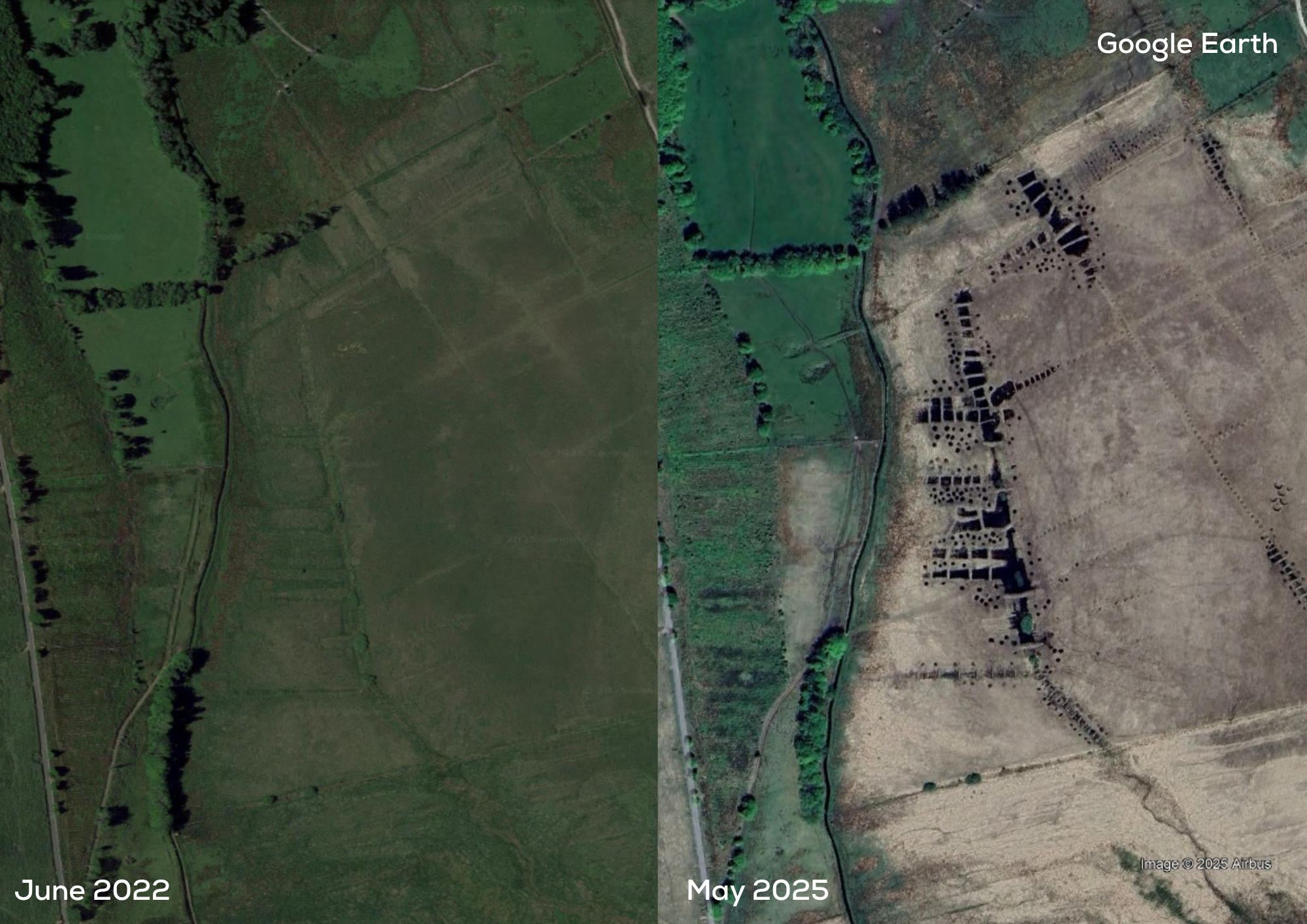
Two Google Earth screenshots, showing before restoration (left) and after blocking had been created (right.) The blocks and associated pools of water can be seen along where the large channel used to run, with eroding peat cuttings blocked perpendicular to this large channel.
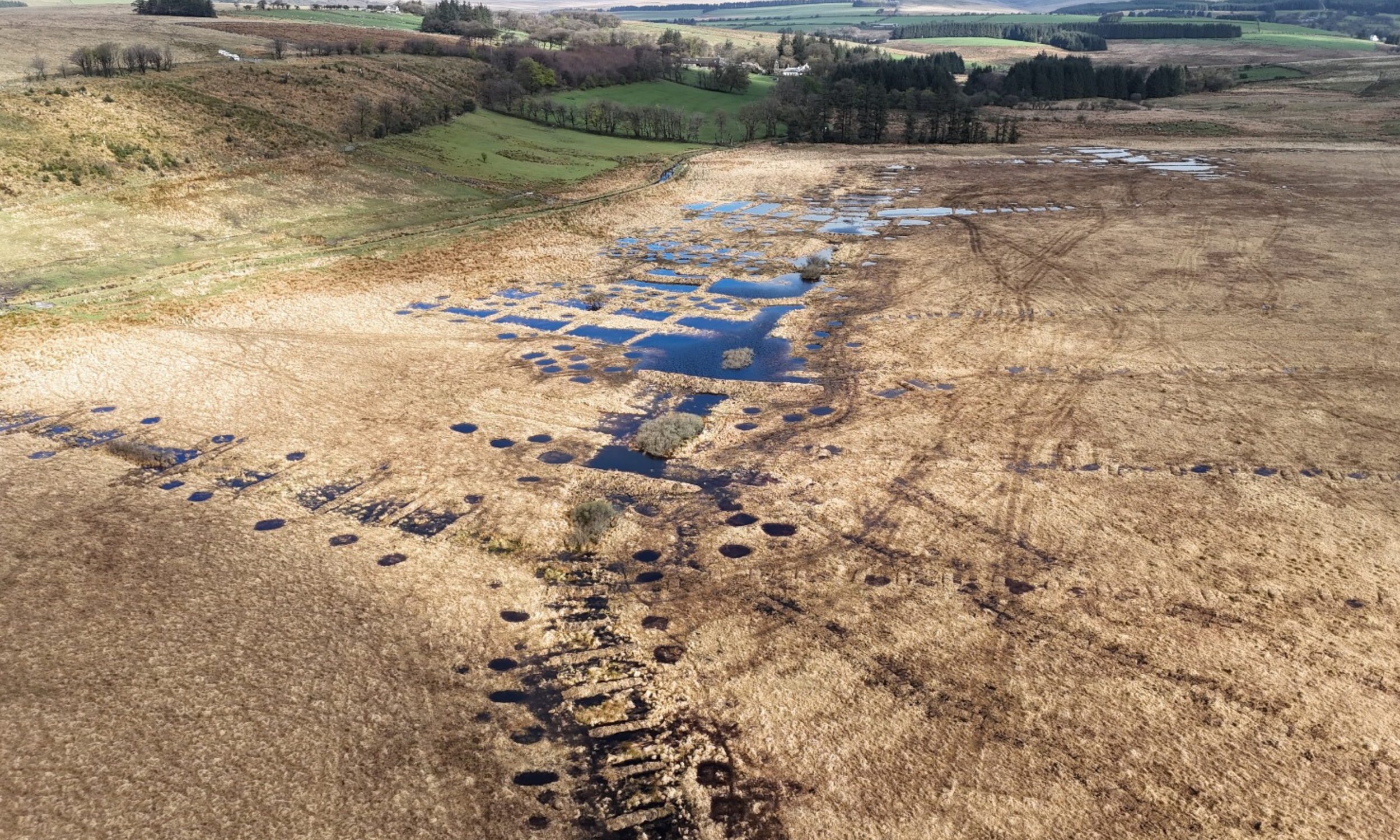
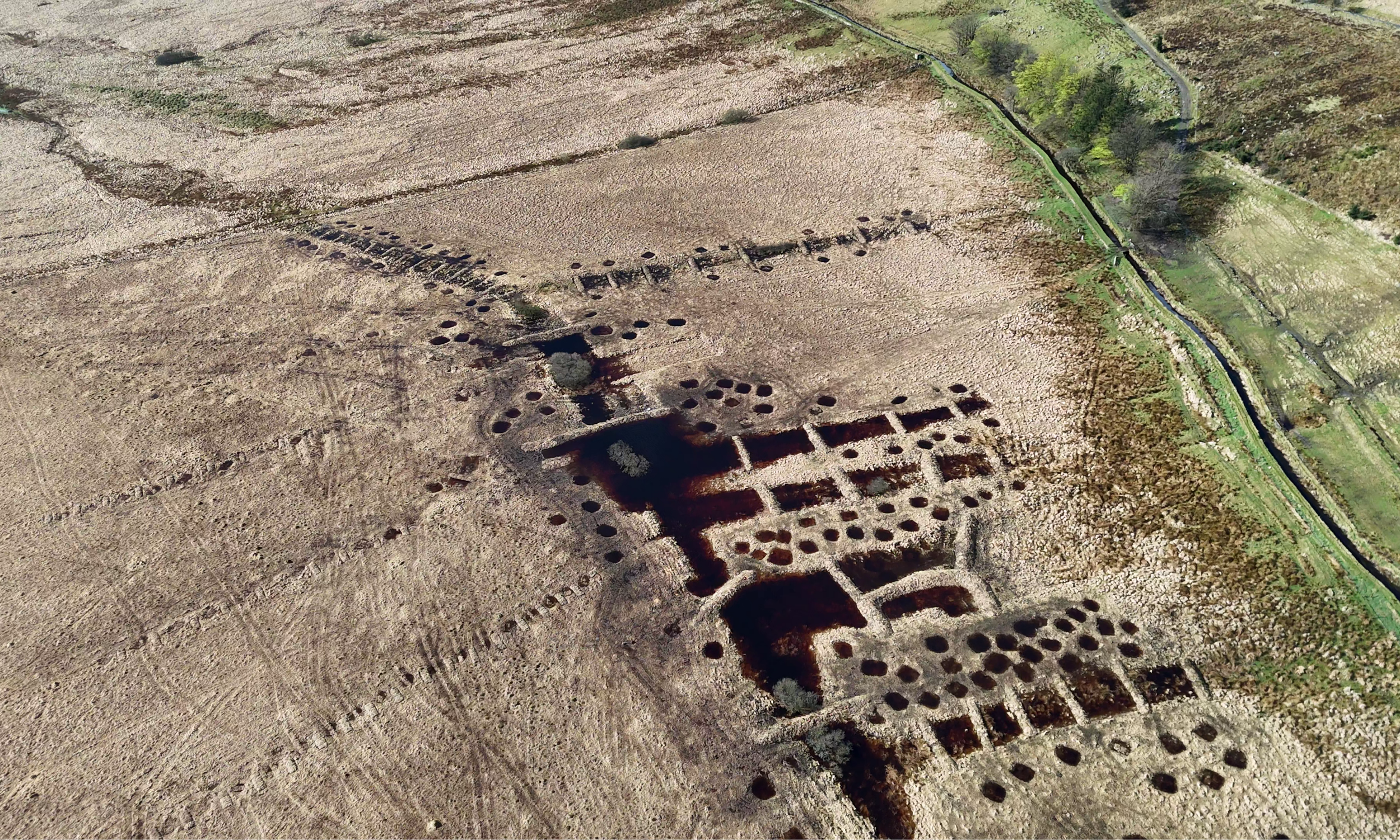
Aerial images taken soon after restoration interventions were completed in spring this year. The large erosion channel running through the site, and eroding peat cutting features, required large amounts of logs and wood to block and ensure water could be held back. This can be seen by the areas of water formed behind the blocks, which will help to raise and stabilise the water table in the degrading peat. The small, shallow, circular pools were made by the process of creating the large blocks, with peat taken from these pools to help create a seal around the wood and ensure effective hydrological restoration.
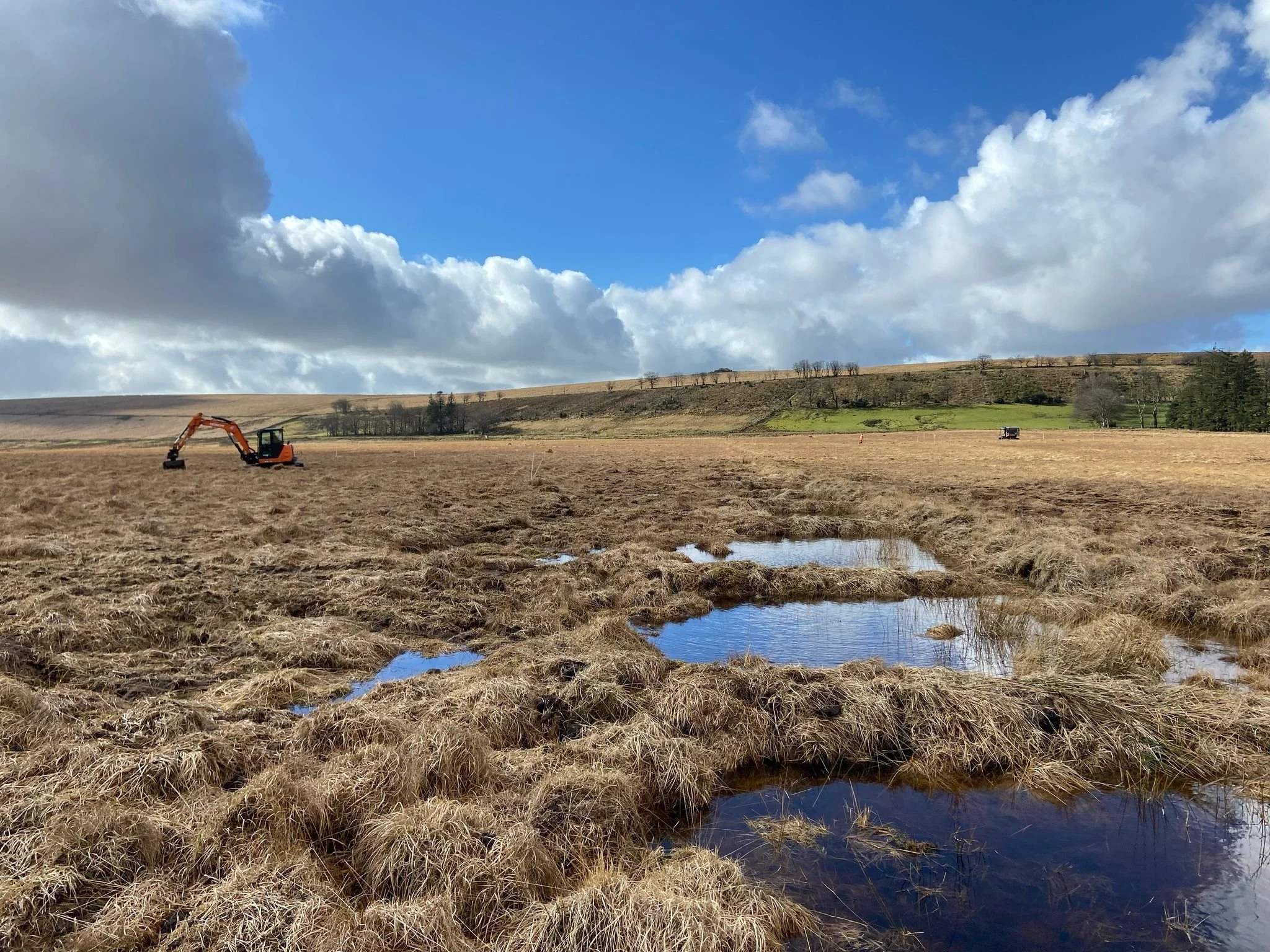
Contractors working on Tor Royal peatland restoration works towards the end of the season, Spring 2025.