
Dragonflies thriving on Exmoor peatland restoration
With many thanks to Chris for his write up from a sunny July day out on Exmoor with the SWPP monitoring team, below:
Exmoor SWPP site visit by Somerset branch of the British Dragonfly Society
21st July 2026
The day could hardly have started better: Exmoor was bathed in unusually warm sunshine, with a light breeze moving across the moor—perfect weather for a dragonfly search.
Our visit began in the first redeveloped areas, as we made our way up along Alderman’s Barrow. It was not long before Golden-ringed Dragonflies and Beautiful Demoiselles appeared, using the narrow, stony runnels that provide such ideal habitat for these striking species.
Higher up the valley, the second enclosure revealed one of the most encouraging features of the visit: a small pond created by the re-wetting work, now edged with emergent vegetation. Here we were treated to close views of Common Hawkers and Emperors, with both males and females present—an encouraging sign that breeding is likely taking place. The discovery of two emerging Southern Hawkers confirmed that this species has already bred successfully here. Azure, Common Blue and Blue-tailed Damselflies were also present in good numbers.
Even during the continuing drought across England, these restored areas are still holding water, offering a strong testament to the success of the SWPP works.
After a brief lunch stop, we crossed the road to Chetsford Water, where the completed SWPP works offered a further chance to see how the restored landscape is developing.
Chetsford Water did not disappoint. Large numbers of Keeled Skimmers and Beautiful Demoiselles were on the wing, joined by a few Golden-ringed Dragonflies and an Emerald Damselfly. The standout moment of the day, however, was the first recorded sighting of a Black Darter at this site. This important discovery provides compelling evidence that peat re-wetting is already enhancing biodiversity and restoring the specialist bog habitat required by the UK Red Listed Common Hawker and Black Darter dragonflies.
Looking ahead, these newly created habitats have the potential to become thriving refuges, giving other endangered species the opportunity to return, spread and re-establish themselves across the area.
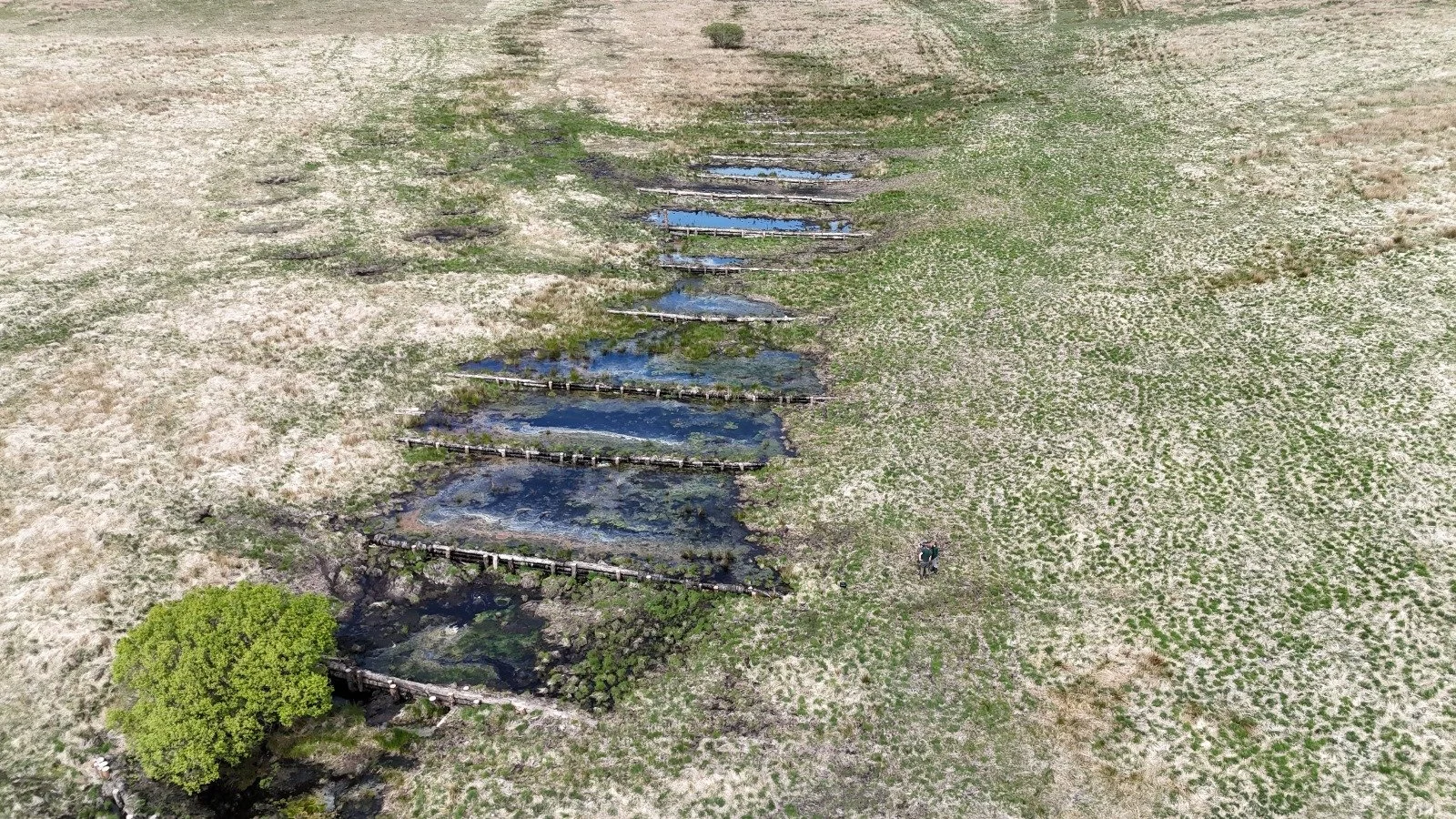
An example of an area of peatland restoration on Exmoor, with a large erosion channel recently blocked by long wooden logs. Dragonflies use these pools of water to breed and feed, and in the years to come this water will fill with peat-forming sphagnum mosses and help to raise and stabilise the water table in the surrounding peat.